
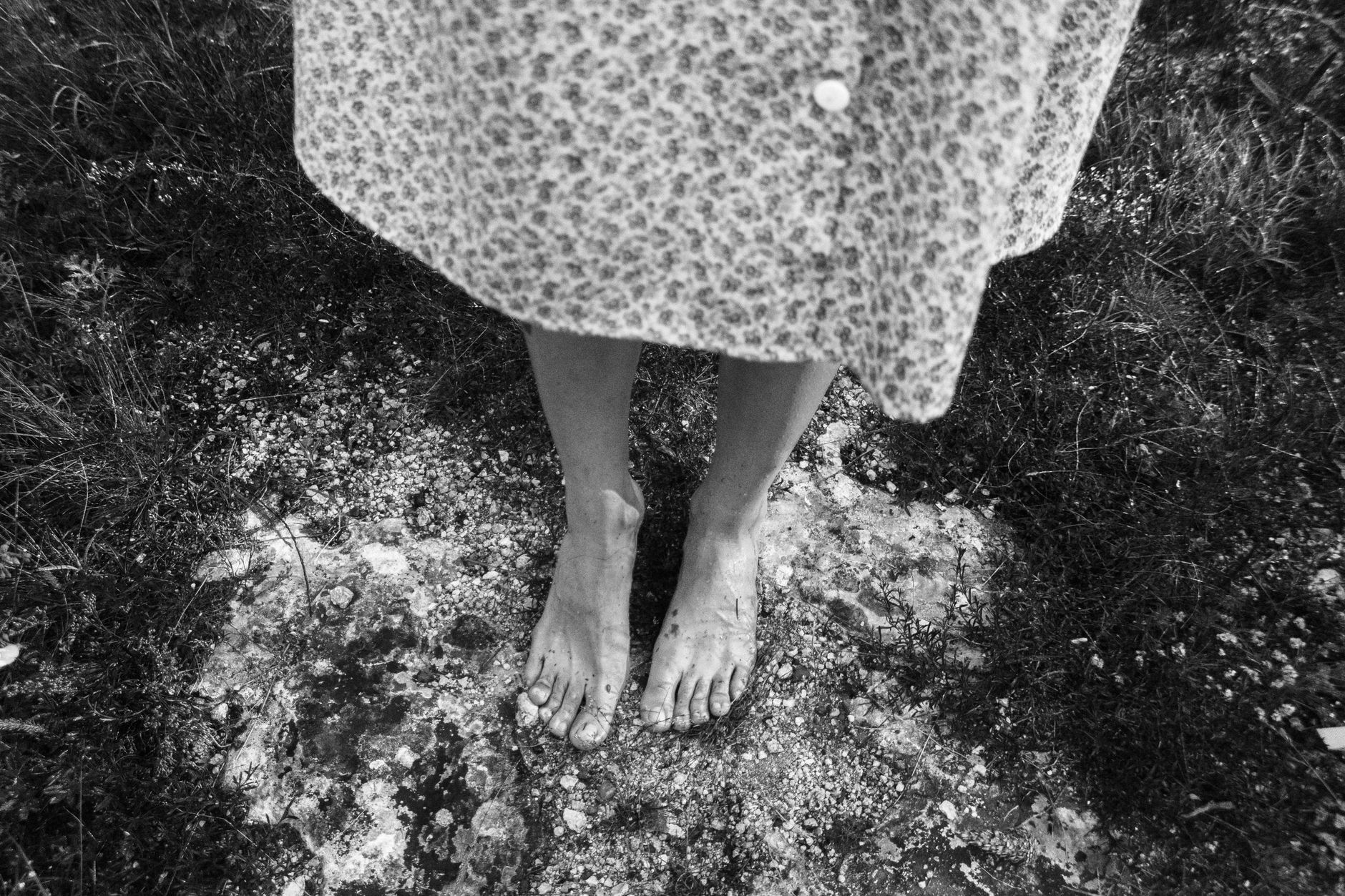
Earthing, also called grounding, is the practice of making direct physical contact with the earth's surface: bare feet on grass, sand or soil, or skin touching rock or water connected to the ground. It sounds almost too simple to matter. But a growing body of research suggests that reconnecting the human body to the earth's natural electrical charge has measurable effects on inflammation, sleep quality and stress.
Most of us spend the day in rubber-soled shoes, on synthetic flooring, in buildings that insulate us completely from the ground beneath them. That insulation is modern comfort. It's also a break from something the human body evolved in contact with for hundreds of thousands of years.
What earthing actually does to your body
The earth carries a mild negative electrical charge. When your bare skin makes contact with the ground, free electrons from the earth's surface transfer into your body. These electrons act as antioxidants, neutralising positively charged free radicals that drive inflammation in your tissues.
A 2012 study published in the Journal of Environmental and Public Health by Chevalier, Sinatra, Oschman and colleagues found that earthing measurably reduced inflammation markers, improved cortisol rhythms and helped regulate sleep. The mechanism is straightforward: the body's electrical system normalises when it's in contact with a stable electrical reference point.
Inflammation is at the root of most chronic illness. Anything that reduces it without pharmaceutical intervention is worth understanding.
The signs you might benefit from more grounding
You don't need a blood test to notice that your system is dysregulated. Poor sleep that doesn't respond to habit changes, chronic low-grade anxiety, joints that ache more than they should, and a general sense of being wired but tired are all patterns that earthing practitioners report improving after regular practice.
These are also the same patterns that flare when stress builds over time. If you've been working on reducing stress naturally through small daily habits, earthing fits naturally into that approach. It costs nothing, requires no equipment, and takes as little as 20 minutes a day.
How to start an earthing practice
The simplest version is this: take your shoes off and stand on natural ground. Grass, soil, sand or unpainted concrete all conduct the earth's charge. Sealed asphalt and synthetic surfaces don't.
Aim for at least 20 to 30 minutes of skin-to-earth contact. Sitting on the ground works as well as standing. Swimming in the ocean counts. Lying on a beach counts. If you live near the coast, you're already surrounded by one of the best earthing surfaces available: wet sand conducts particularly well.
Rainbow Beach, with its long stretches of sand running into the surf of the Cooloola Coast, is an ideal place to practise. Walking barefoot along the water's edge at low tide offers both grounding contact and the additional calming effect of natural light, movement and the sound of waves.
For those who can't get outside consistently, earthing mats and sheets exist as a practical alternative. The Earthing Institute provides research summaries and guidance on these tools for indoor grounding when outdoor access is limited.
Earthing and sleep: the connection worth taking seriously
Cortisol, your primary stress hormone, should peak in the morning and taper through the day. In chronically stressed people, that rhythm flattens or inverts. The Chevalier study found that earthing for 8 weeks normalised cortisol profiles in participants, with most reporting deeper and more restorative sleep within the first 2 weeks.
If you've been exploring natural ways to improve your sleep and haven't added a daily barefoot walk to the list, this is the lowest-friction addition you can make. Pair it with morning light exposure and you're addressing two of the three main biological inputs that regulate your circadian rhythm.
What earthing doesn't do
Earthing isn't a treatment for diagnosed conditions. It doesn't replace medical care, and practitioners who present it as a cure for specific diseases are overreaching. What the evidence supports is a regulatory effect: the body's inflammatory and nervous system responses becoming less erratic over time with consistent practice.
Think of it the way you'd think of sleep, hydration or sunlight. None of those are treatments either. All of them are conditions your body needs to function correctly, and their absence creates downstream problems.
Bringing earthing into a broader wellness approach
Earthing works best as part of a layered practice, not as a standalone fix. Pair it with breathwork, time in nature, adequate sleep, and periods of genuine stillness. Each of these practices supports the same underlying goal: a nervous system that isn't in a constant state of alert.
If you're at Rainbow Beach, even a short stay offers daily access to the beach, the National Park and the kinds of natural environments where grounding happens almost without trying. The sand, the salt water and the quiet are doing more for your physiology than you might realise. You just need to take your shoes off.