
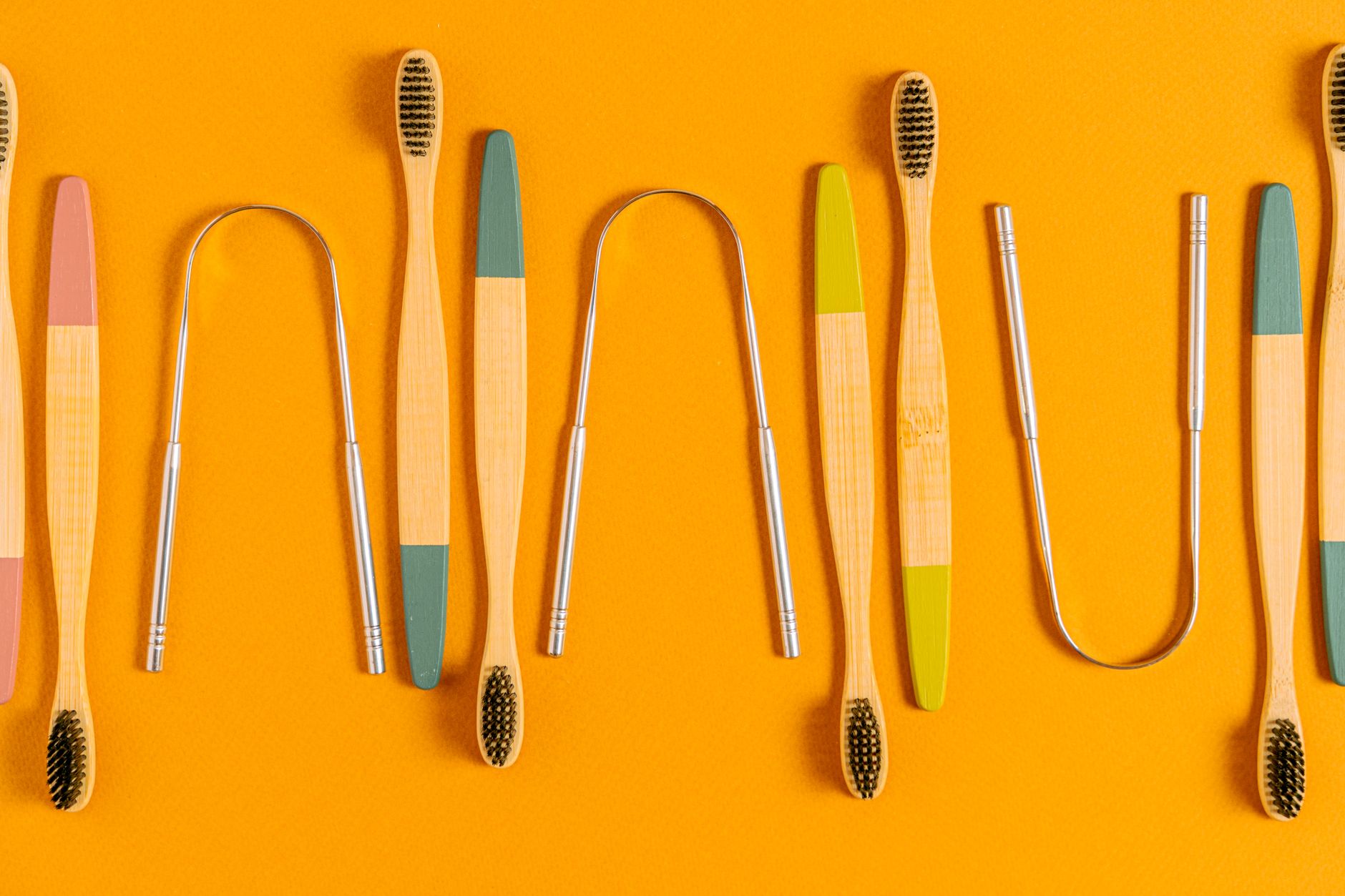
Tongue scraping is an Ayurvedic practice that's been around for thousands of years, and it deserves more attention than it gets. The idea is simple: you drag a small curved tool across your tongue each morning to remove the coating of bacteria, dead cells, and metabolic waste that accumulates overnight. Most people brush their teeth without ever thinking about their tongue, and that gap matters more than it sounds.
What builds up on your tongue overnight
While you sleep, your digestive system keeps processing. Bacteria multiply in your warm, undisturbed mouth. Ayurvedic medicine calls the residue that coats your tongue in the morning "ama," which translates roughly as unprocessed waste. Whether you frame it in traditional or biomedical terms, the substance is real. You can see it: a white or yellowish film that's thickest at the back of the tongue.
Left in place, that coating doesn't just sit there. You swallow it with your first glass of water or bite of food, reintroducing bacteria to your gut that your body spent the night trying to process out. Tongue scraping removes it before that happens. It also clears the taste buds, which is why people who scrape consistently often notice food tasting sharper within a week or two.
How tongue scraping differs from brushing
Brushing your tongue with a toothbrush does something, but not the same thing. A brush pushes debris around and between papillae (the small bumps on your tongue's surface) rather than pulling it off cleanly. A scraper drags the coating to the tip of the tongue in one stroke, where you can rinse it away. The difference in what comes off the tool versus what a brush leaves behind is visible and, honestly, fairly motivating.
The tool itself is usually made from stainless steel or copper. Copper scrapers come from the Ayurvedic tradition and have genuine antimicrobial properties. Stainless steel is durable and easier to find. Plastic scrapers exist but wear down quickly and are harder to clean thoroughly. A good copper or stainless scraper costs around $10–$20 and lasts for years.
The right technique (and the mistakes most beginners make)
Hold the two ends of the scraper with both hands. Extend your tongue, place the scraper as far back as you can comfortably reach without triggering your gag reflex, and pull it forward to the tip in one firm, gentle stroke. Rinse the scraper. Repeat 5 to 7 times, working across the full width of the tongue. That's it.
The most common mistakes are pressing too hard and reaching too far back. You don't need pressure. The coating lifts easily; force just irritates the tissue. If you're gagging, you're going too far back. Start shallower and work your way back over a few days as your reflex settles.
Do it first thing in the morning, before drinking water and before brushing. Timing matters because drinking or eating first just moves the coating further into your system, which defeats the purpose. Scraping takes about 30 seconds once you know what you're doing.
What tongue scraping actually supports
The clearest benefits are oral: fresher breath, cleaner taste, and a reduction in the bacteria that contribute to tooth decay and gum issues. The bacterial load on an unscraped tongue is significant, and the mouth is the entry point to the rest of the body, so what lives there doesn't stay there.
Ayurvedic practitioners connect tongue scraping to broader digestive health. The reasoning is that stimulating the tongue activates saliva production and digestive enzymes, preparing the gut for the day. This is similar in logic to the principles behind oil pulling, another Ayurvedic oral practice that works on the same premise: that the mouth is both a reflection of internal health and a point of influence on it.
Some people also report reduced post-nasal drip and a general sense of morning clarity, though these effects are harder to measure. What's consistent across accounts is the taste improvement. Taste buds that are coated in film register flavour poorly. Clear them, and you need less salt, less sugar, and less stimulant to feel satisfied by food.
Adding tongue scraping to a broader morning ritual
Tongue scraping works best when it's part of a sequence rather than an isolated habit. In Ayurveda, it typically sits alongside oil pulling, warm water with lemon, and nasal rinsing as part of a dinacharya (daily self-care routine). You don't need to adopt all of these at once. Scraping is the easiest starting point precisely because it takes the least time and shows the most immediate visible result.
If you're already working on a morning routine that sets a calmer tone for the day, tongue scraping fits naturally into the first two minutes. Do it before your shower, before breakfast, before anything else goes into your mouth. The ritual quality matters too. Thirty seconds of deliberate attention to your own body, first thing in the morning, is a different kind of start than scrolling a phone.
For those exploring holistic health more broadly, tongue scraping is the kind of practice that earns its place by being so low-effort that there's no real argument against trying it. It asks nothing of you except consistency. Try it for two weeks and see what changes in your sense of taste alone. That tends to be enough.
Cleaning and caring for your scraper
Rinse the scraper under warm water immediately after each use. Once a week, soak it in warm water with a small amount of apple cider vinegar or a few drops of tea tree oil to keep bacterial build-up from the tool itself from becoming the problem. Copper scrapers develop a natural patina over time. That's fine and doesn't affect function. If yours develops a green tinge, a gentle rub with a halved lemon and some salt will restore it.
Replace a plastic scraper every few months. A metal one, properly rinsed, can last indefinitely. Keep it separate from your toothbrush area so it dries fully between uses rather than sitting in pooled water.
Tongue scraping is one of those practices that sounds faintly obscure until you try it, at which point it becomes the habit you can't imagine skipping. Start tomorrow morning. The bar is genuinely that low.