
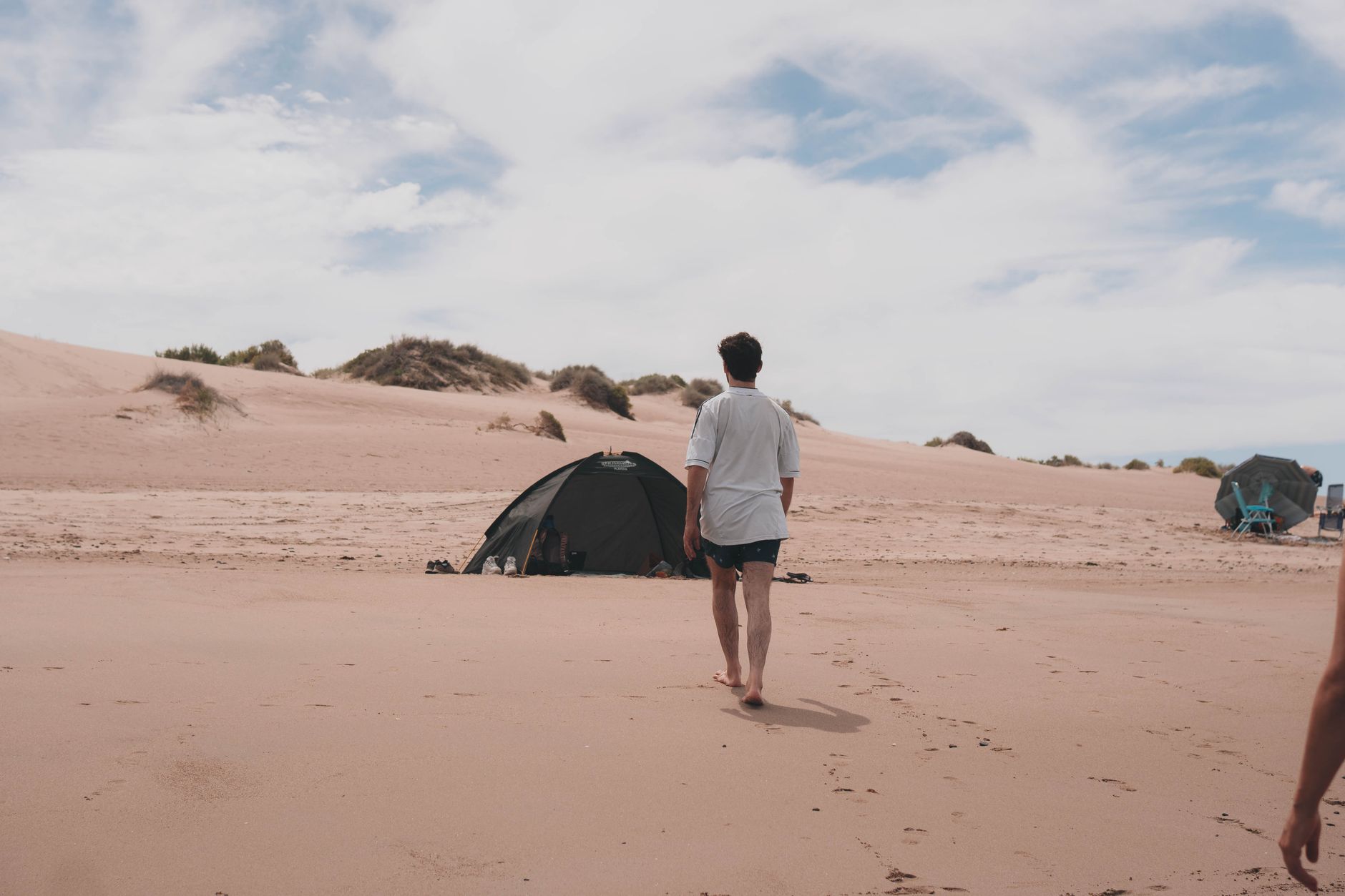
Camping near Rainbow Beach is one of the most rewarding ways to experience the Cooloola Coast. Once the day-trippers drive home and the beach empties out, the colours in the sand cliffs deepen, the shore birds come back, and the kind of quiet that's genuinely hard to find anywhere near south-east Queensland settles in. This guide covers the main campgrounds, what each one suits, and the practical things that catch first-timers off guard.
Why camping here is worth the extra effort
Rainbow Beach sits at the southern gateway to the Great Sandy National Park, a protected stretch of dune, wallum heath and tidal waterway that runs north to Double Island Point and beyond. Most of that landscape is only reachable by four-wheel drive or on foot. Camping inside it means waking up before anyone else arrives, walking to fishing spots that don't appear in any mainstream travel guide, and watching sunrises along a coastline that feels genuinely remote. If you're the kind of traveller who finds that sort of solitude restorative, a night or two out here does something a day visit simply can't.
For those who've already explored things to do near Rainbow Beach for nature lovers, camping is the logical next step: it trades convenience for depth.
The main campgrounds to know
Freshwater camp
Freshwater is the most popular and accessible campground in the area, sitting just north of Rainbow Beach township inside Great Sandy National Park. It's set back from the beach in a patch of coastal woodland, and it has flushing toilets and cold showers, which puts it a step above most bush camps in the region. Sites suit both tents and campervans, though you'll need a 4WD to reach some of the better spots. Book well ahead during school holidays. Queensland Parks online booking fills up weeks out.
Double Island Point camp
Double Island Point sits roughly 14 km north of the Rainbow Beach township along the beach track. The campground is small, the facilities are basic (pit toilets, no showers), and the location is exceptional. You're directly adjacent to one of the best surf breaks on the Sunshine Coast, and the lighthouse headland gives you views south all the way down Cooloola's coloured cliffs. Getting there on the beach track requires low tide timing and a 4WD. Check the tide charts before you leave.
Teewah coloured sands camps
The Teewah Beach corridor, south of the Rainbow Beach township and accessed from the Noosa North Shore ferry crossing, offers a string of low-key beach camps spread across roughly 40 km of coastline. These are 4WD-only, permit-required sites with minimal facilities. They attract experienced campers who want to drop anchor somewhere quiet for three or four nights without seeing another soul. Lake Cootharaba and the Noosa Everglades sit to the west, accessible by canoe from several of the camps. That combination, ocean beach on one side and freshwater wilderness on the other, is rare.
What you need before you arrive
Every campsite inside Great Sandy National Park requires a pre-booked permit through Queensland Parks and Wildlife. You can't pay on arrival. Rangers do check, and the fines are significant. Beyond the permit, the practical checklist for any Cooloola camp looks like this:
- A 4WD with a working tyre pressure gauge (beach driving requires deflation to around 18–20 psi)
- A recovery kit (snatch strap, shovel, traction boards) or a plan to travel with another vehicle
- All drinking water for the trip. Freshwater camp has a tap; most other sites don't
- A gas stove. Open fires are restricted across most of the park and banned entirely during fire danger periods
- A rubbish removal plan. Leave No Trace applies strictly in this park
Insect repellent is non-negotiable from October through April. The sandflies at Teewah Beach at dusk are relentless. Long sleeves help more than any spray.
The best time of year to camp
June through September is the sweet spot. Temperatures sit between 15°C and 23°C, the rainfall is low, sandfly activity drops sharply, and the humpback whale migration runs through July and August. You can watch whales breach from camp at Double Island Point without moving from your chair. The trade-off is that winter school holidays (late June to mid-July) fill the bookable sites fast. Mid-May and early October hit a good balance between weather, wildlife and availability.
Summer camping is possible but the heat, humidity and insects require more preparation. Afternoon thunderstorms roll in from the west between November and March. If you're planning a longer stay during that period, a quality waterproof tarp rigged above your tent is worth the weight.
How camping here fits a broader wellness trip
A few nights camping along the Cooloola Coast pairs naturally with time spent slower and more deliberately. The absence of phone signal in most of the park functions as an involuntary digital detox. Waking with the light rather than an alarm, cooking simple meals, and spending evenings watching the stars rather than a screen tends to recalibrate something. If you're planning a trip that mixes camping with a proper rest, a Rainbow Beach wellness itinerary gives you a good framework for combining both.
The campgrounds themselves are also a practical base for early morning beach walks. Sunrise from Double Island Point, looking back south along the coloured cliffs, is one of those experiences that stays with you for a while after you've gone home.
A few things that catch campers out
Beach track conditions change fast. A section that was firm at low tide can be soft and corrugated by the afternoon. Check the tide chart daily, not just once when you arrive. The northern beach track from Rainbow Beach to Double Island Point is tidal: the section near Mudlo Rocks closes for roughly 2 hours either side of high tide. Missing that window means a 4-hour wait on the beach.
Mobile coverage drops out north of the township. Download your maps, tide charts, and park permit confirmation before you leave Rainbow Beach. The Queensland Parks app works offline once loaded.
Finally, the Cooloola Coast is dingo country. Food storage rules apply strictly. Keep all food in hard containers inside your vehicle overnight, never leave scraps on the ground, and always supervise children near the tree line. The local dingo population is habituated enough to be confident around camp but they're wild animals and the rules exist for good reason.