
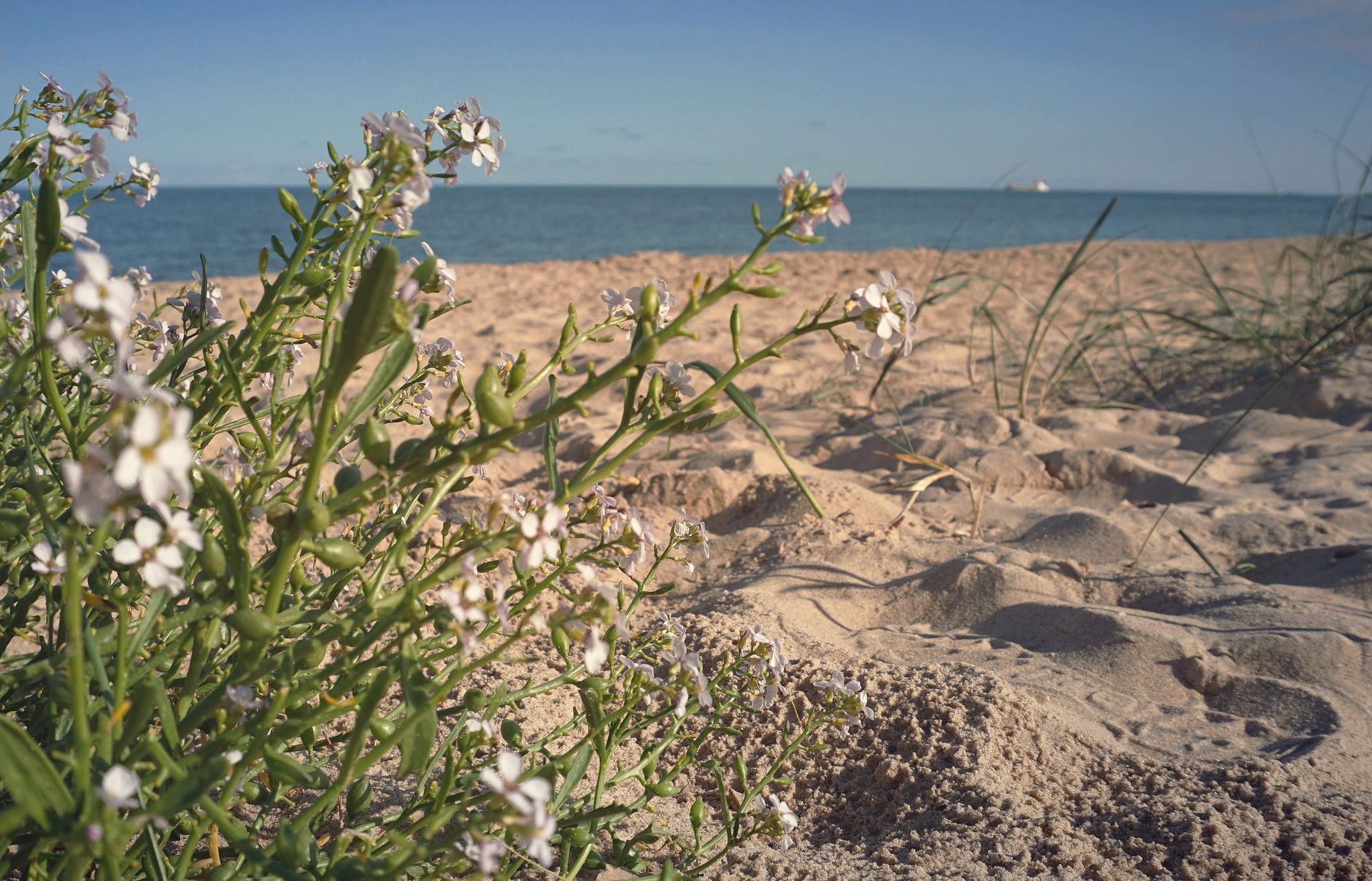
Foraging near Rainbow Beach isn't something most visitors think about, but the Cooloola Coast holds a surprisingly rich larder for those willing to slow down and look closely. The dunes, heath scrub, estuaries and coastal fringe that stretch between Rainbow Beach and the Cooloola Section of Great Sandy National Park support plants that Aboriginal Peoples of the Kabi Kabi (Gubbi Gubbi) nation gathered and used for thousands of years. Understanding even a small part of that knowledge changes how you walk here.
Why foraging on the Cooloola Coast is different
Most foraging guides are written for temperate gardens or cool-climate forests. The Cooloola Coast is subtropical coastal heath, and the rules shift. Plants here cope with sand that holds almost no nutrients, salt spray, intense heat and periodic flood. They're tough, often small, and concentrated near water sources or the wetter margins of the dune swales.
The landscape also sits inside or adjacent to national park land, where collecting any plant material without a permit is prohibited. Foraging near Rainbow Beach is largely a practice for private coastal fringes, roadsides, estuary margins and the campsite surrounds of designated areas. Know exactly where you are before you pick anything. If you're unsure, identify and observe rather than collect.
Plants worth knowing by sight
Beach spinifex (Spinifex sericeus) covers the foredunes in dense silver-green clumps and isn't edible, but it's a useful landmark. The edible plants tend to sit just behind it, in the secondary dune zone where the soil retains a little more moisture.
Pigface (Carpobrotus glaucescens) is one of the most recognisable coastal succulents on the Cooloola Coast. Its thick, finger-shaped leaves are salty and slightly tart eaten raw. The magenta flowers produce small figs that taste like a cross between salty strawberry and kiwifruit. Pigface grows sprawling across the sand in large mats and fruits through late summer and autumn.
Coastal saltbush (Rhagodia spinescens and related species) appears in the scrubby vegetation behind the beach. The small grey-green leaves have a mild saline flavour and can be eaten raw or lightly wilted. Indigenous communities across Australia used saltbush leaves as both food and medicine.
Finger lime (Citrus australasica) doesn't grow right on the beach, but it appears in the rainforest margins further inland, particularly around the Cooloola Wilderness Trail corridor. The caviar-like vesicles inside are intensely acidic and flavour-rich. Finger lime has become well known in Australian cuisine over the past decade, though wild specimens are far less common than cultivated ones.
Bush tucker and cultural context
Foraging in this part of Queensland sits within a living cultural tradition. The Kabi Kabi people maintained detailed, place-specific knowledge of the Cooloola Coast's edible plants, fish, shellfish and seasonal cycles for an extraordinarily long time. Approaching that knowledge with respect matters as much as any identification skill.
A few community-led bush tucker tours run out of Rainbow Beach and Tin Can Bay. These are the most responsible way to learn. A guide who has grown up with this knowledge will show you things a field guide can't: which plants appear together, which seasons bring specific foods, and how to take only what a place can spare. It's a far richer experience than solo foraging from a book, and it supports local cultural education directly.
What to check before you forage
Three things need confirming before collecting anything. First, location: you must be on private land with the owner's permission, a roadside reserve, or a designated area where collection is explicitly permitted. Second, identification: don't eat anything you haven't confirmed from at least two independent sources, ideally a physical field guide specific to south-east Queensland. Third, quantity: take a small amount from a healthy, abundant stand. Stripping a single plant defeats the purpose and damages the ecosystem.
The Queensland Department of Environment and Science maintains guidance on what activities are permitted in Great Sandy National Park. Check their site before planning anything that involves collecting plants, even a few leaves.
Foraging as a grounding practice
There's a reason foraging feels restorative in a way that's hard to explain until you've done it. Walking slowly, crouching down, reading the ground with your eyes, touching plants, smelling crushed leaves: it pulls you fully into your senses and out of your head. It pairs naturally with the kind of deliberate presence that a stay at a Rainbow Beach wellness itinerary tries to cultivate.
The Cooloola Coast's nature encounters tend to work this way. Whether it's watching dolphins at the surf break, scanning rock pools at low tide, or sitting quietly at the edge of the heath waiting for a honeyeater to land, the common thread is slowing down enough for the place to reach you. Foraging is just one more version of that attention. The things to do near Rainbow Beach for nature lovers are rarely the loudest ones.
A few final cautions
Identification errors are the most serious risk. Coastal Queensland has some visually similar plants where one species is edible and a closely related one is not. Don't rely solely on photographs from social media. Use a current field guide written specifically for Queensland or south-east Queensland, and when in doubt, don't eat it.
Wash everything. Even plants growing in clean-looking dune environments can carry sand, salt crust, insect residue and the occasional trace of vehicle exhaust from nearby tracks. A quick rinse changes the flavour and removes the grit. Start small with any new plant, even ones that are well documented as safe, to see how your body responds. And keep children close: curious hands and bright berries are a combination that needs supervision.
Foraging near Rainbow Beach rewards patience over ambition. A handful of pigface leaves eaten at the edge of the dunes, looking out at the coloured cliffs, is a better meal than a basket of misidentified plants taken home in a hurry.