
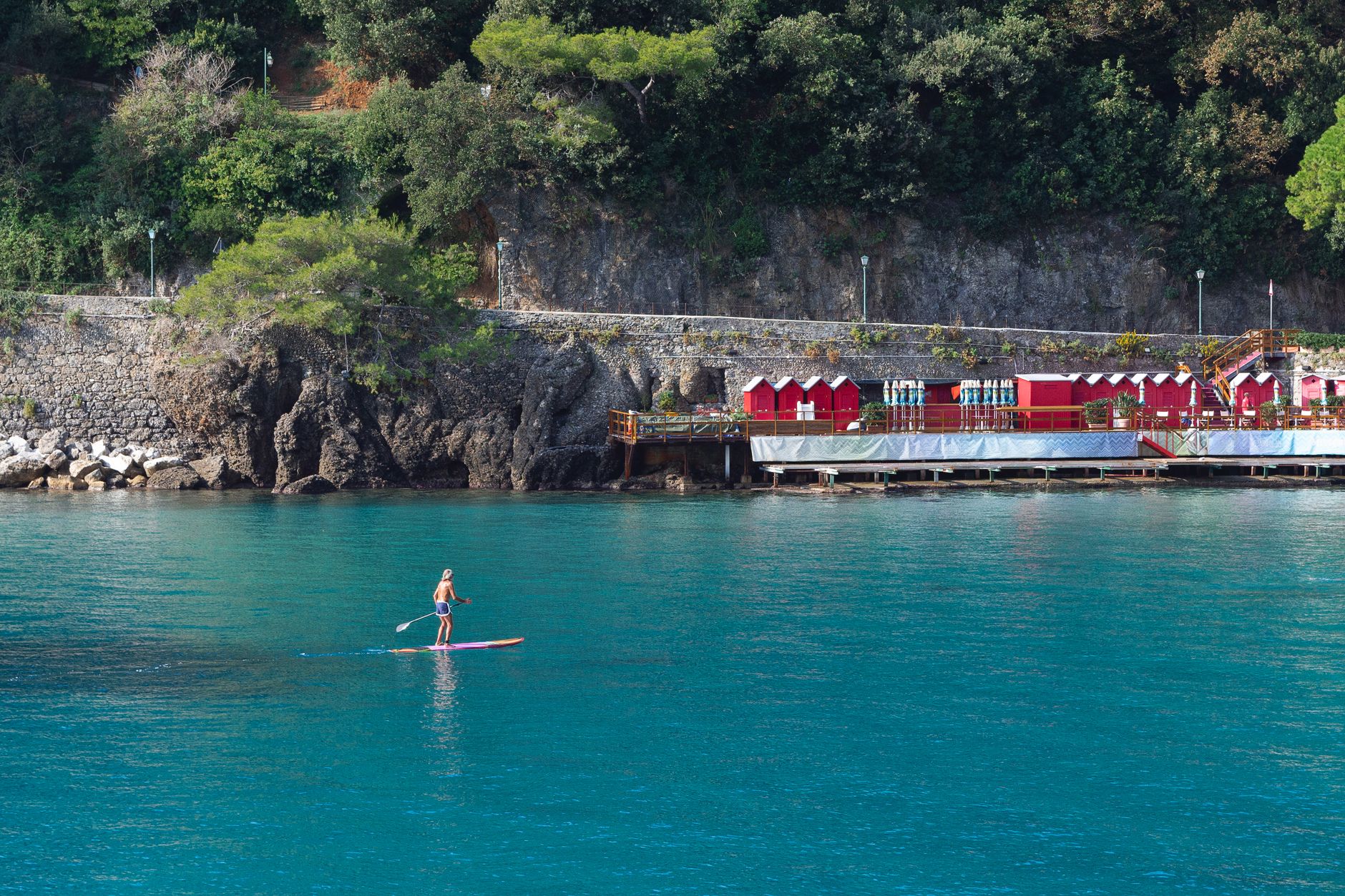
Paddleboarding at Rainbow Beach is one of those experiences that earns its place on a visit without requiring any prior skill. The beach faces north-east into the Coral Sea, and the inshore water between the sand and the reef breaks sits calm enough on most mornings for a flat-water paddle. The coloured cliffs look entirely different from the water. From eye level on a board, the ochre, red and white bands of Carlo Sandblow's southern edge stretch wide across the horizon in a way no cliff-top lookout replicates.
Most visitors discover paddleboarding here by accident, borrowing a board from their accommodation or spotting a hire sign on the main beach track. That's a perfectly fine way to start. A little preparation makes the difference between a paddle you'll remember and one you'll spend recovering from.
When to go and what conditions to expect
Early morning is the best window. From roughly 7am to 10am, the south-easterly sea breeze hasn't built yet and the water surface stays glassy. By 11am on most days, the trade wind picks up from the south-east and turns the inshore area choppy enough to make a beginner's paddle genuinely hard work. Afternoons are generally unsuitable unless you're comfortable in chop and have experience reading wind lines.
Tides matter more here than at sheltered estuaries. A low tide exposes the shallow sandbanks north of the main beach, which suits beginner paddlers who want to stand in ankle-deep water if they fall off. A high tide pushes more water into the channel between the beach and the outer banks, creating a slight current that can pull you south faster than you'd expect. Check the Rainbow Beach tide chart on Willyweather the night before and aim for the two hours around high tide if you want the flattest water with the least current.
Wind above 15 knots is a hard stop for beginners. It's not the paddling out that causes problems; it's the paddle back. A board catches wind like a sail, and an onshore breeze that feels gentle on the beach feels very different when you're trying to paddle directly into it from 400 metres out.
Where to launch from the beach
The main beach access point near the surf club puts you directly onto the longest flat stretch. Launch here and paddle north to stay in the calmer water behind the outer sandbank. Paddling south takes you toward the rock ledges and headland, which suits more experienced paddlers comfortable with reading wave sets. The northern run is the one most people choose: flat, wide, and forgiving if something goes wrong.
A second option is to carry or wheel your board down to the tidal inlet just north of the main beach. This inlet connects to a shallow lagoon system that drains slowly on the ebb tide. It's calm in almost all conditions and shallow enough that children can paddle here without any real risk. The view isn't as dramatic as the open beach, but the wildlife is. Pelicans, ospreys and the occasional sea turtle move through this inlet on most mornings.
Gear: what you actually need
A 10'6" or 11' all-round inflatable SUP suits most paddlers at Rainbow Beach. The beach surface is firm enough to pump one up at the car park without losing too much air by the time you reach the water. Hard boards are faster and more responsive, but they're harder to transport on sandy tracks and take more of a knock when you drag them over the shell grit near the water's edge.
Three items matter more than the board itself:
- A leg rope. Always. The board becomes a flotation device if you fall, and without a leg rope it drifts downwind faster than you can swim.
- Reef-safe sunscreen. The UV index at Rainbow Beach regularly hits 11 or above in summer. An hour on flat water with no shade is more exposure than most people account for.
- A personal flotation device (PFD). Queensland Maritime Safety requires one on board for paddlers beyond the flagged swimming area. A waist-belt inflatable PFD weighs almost nothing and doesn't interfere with paddling.
What you can see from the water
The coloured cliffs are the obvious draw. From the water, you're looking at the southern face of the Cooloola sandmass, and the layering is more visible here than from the beach below the cliffs. Early morning light hits the red and ochre bands directly and the contrast is sharp. Photographers often paddle out just for this angle.
Marine life in the inshore zone includes schools of mullet, the occasional spotted eagle ray moving through the shallows, and bottlenose dolphins that move south along the beach on most mornings. The dolphins don't reliably come close to paddleboarders, but they pass within 50 to 100 metres often enough that it's worth watching the water to the south. For a more dedicated look at what the local dolphin population gets up to, dolphin watching at Rainbow Beach covers the patterns and timing in more detail.
Humpback whales pass close enough to the beach between June and October that paddleboarders on the outer edge of the sandbank sometimes see spouts to the east. Don't paddle toward them. Queensland regulations require 100 metres of separation, and a startled whale surfacing near a paddleboard is not a situation worth engineering.
Combining paddleboarding with a wellness morning
An early paddle works particularly well as part of a broader morning reset. The physical demand is moderate, the environment is quiet, and the focus required to balance on a board functions like a moving meditation: your attention stays on the water and your body, and the mental noise of the previous day settles without you having to try. It pairs naturally with a sunrise walk along the beach afterward, or with a slow breakfast and some journalling at the water's edge.
If you're staying at Spirit of Rainbow for a retreat or respite break, this kind of active stillness complements the rest of the programme well. Those who find seated meditation difficult often respond much better to something like paddleboarding, which keeps the body lightly occupied while the mind quiets. For others, sunrise walks along Rainbow Beach offer an equally grounding start if the water isn't calling.
Practical details: hire and access
Board hire is available from a small number of operators based in Rainbow Beach township. Prices vary but typically sit around $30 to $50 for a two-hour hire, including leg rope and basic instruction. Book ahead in school holidays and during the peak whale-watching season from July to September, when the beach is busier than usual.
There is no boat ramp fee or launch permit required for non-motorised craft at Rainbow Beach. The beach itself is public and the inshore water is unpatrolled north of the flags, so paddlers are responsible for their own safety assessments. Check in with a local operator before your first paddle; they'll tell you if anything has changed with the sandbanks or if there's been recent shark activity worth knowing about.
Paddleboarding rewards an early start. Set the alarm, check the tide, and get on the water before the wind arrives. The cliffs, the birds, and an hour of flat-water quiet are worth the 6:30am inconvenience.