
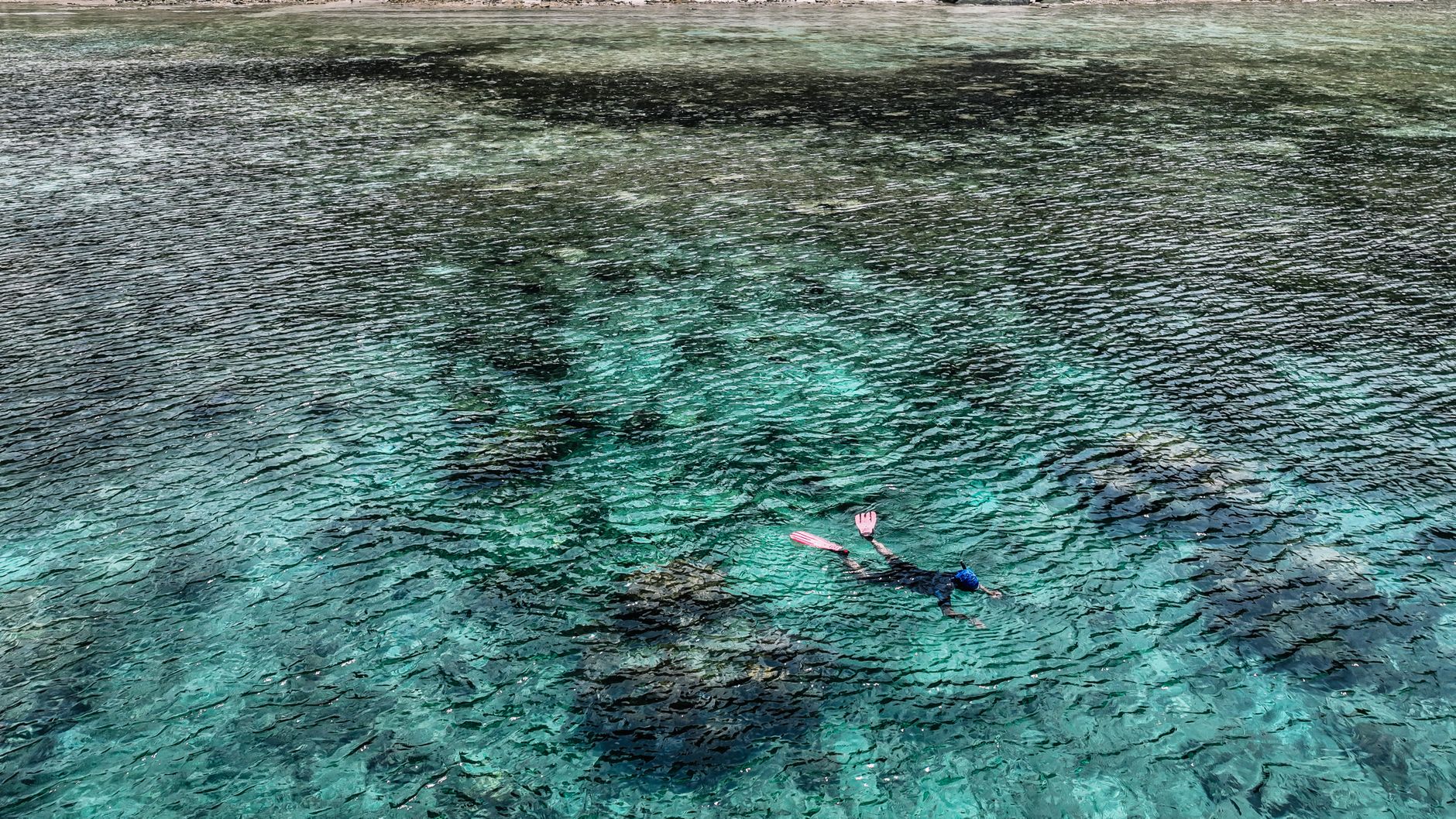
Snorkelling near Rainbow Beach sits firmly in the category of things locals know and visitors rarely think to try. Most people arrive for the coloured sand cliffs, the surf and the dunes, and they leave without realising that just below the waterline there's an entirely different coastline worth exploring. With a mask, a snorkel and a little timing, the Cooloola Coast opens up in a way that no walking track quite manages.
Where to snorkel near Rainbow Beach
The beach itself is a long exposed surf strip, so snorkelling directly off the main beach is rarely practical. The water moves fast, visibility can be low after swells, and the sandy bottom doesn't offer much to look at. The better spots require a short drive or a kayak.
Double Island Point is the standout location for snorkellers on this stretch of coast. The rocky reef at the base of the point shelters a mix of reef fish, soft corals and the occasional turtle. Conditions here are weather-dependent: a calm day with light winds from the south or west makes the water clear and easy to enter. On those days it's genuinely exceptional. Experienced snorkellers familiar with safe swimming spots and seasonal tips along Rainbow Beach will know that conditions can shift quickly at exposed points, so read the swell forecast before committing.
Wolf Rock, sitting about three kilometres offshore from Double Island Point, is a step up in ambition. It's a dive site primarily, but calm-water snorkelling around its shallow edges is possible for confident swimmers. Grey nurse sharks congregate here year-round, making it one of the few spots in Queensland where a snorkeller might reasonably spot one. Access is via a boat or tour from Rainbow Beach township.
The inshore rock shelves along the Cooloola Coast between Rainbow Beach and Inskip Point offer quieter exploration at low tide. These aren't dramatic reef environments, but they do shelter small wrasse, goatfish and the kind of detailed marine life that rewards slow, patient looking. Combine this with a tide pooling session at Rainbow Beach on the same low-tide window and you'll cover a surprising amount of the intertidal zone in a single morning.
What you'll find underwater
The marine life around the Double Island Point reef reflects the meeting of cooler temperate water from the south and warmer subtropical currents from the north. That mix produces unusual biodiversity for the latitude.
Expect to see blue-throated wrasse, parrotfish and sergeant major damsels in the shallower sections. Wobbegong sharks rest on the sandy patches between rocks, camouflaged well enough that you can swim within a metre before noticing them. They're harmless if left alone. Loggerhead turtles pass through regularly, and green turtles are spotted near the point during warmer months.
Closer to Wolf Rock, leopard sharks and grey nurse sharks use the site as a resting aggregation point. Grey nurse sharks look formidable. They aren't a threat to snorkellers who keep a respectful distance and don't approach from above.
Best conditions and timing
September through November delivers the most reliable snorkelling weather. Water temperature sits around 22 to 24 degrees Celsius, which is comfortable for 45 minutes to an hour in a standard wetsuit or rash vest. Wind tends to be lighter in the mornings, so an early start beats an afternoon session every time.
Avoid snorkelling within two days of significant rainfall. Freshwater runoff from the Cooloola wetlands can cloud nearshore water and reduce visibility to almost nothing. After a dry stretch of four or more days, the water at Double Island Point can turn genuinely glassy and clear.
Tidal stage matters too. The two hours either side of high tide usually offers the best visibility at the rocky sites, because tidal movement is at its slowest and sediment settles. At low tide, some of the reef becomes accessible for wading, but the snorkelling depth gets shallow.
What to bring and how to prepare
Hire gear is available from several operators in Rainbow Beach township, including fins, mask and snorkel sets, and wetsuits. Buying your own mask is worth it if you plan to snorkel more than once: a good fit makes a significant difference to comfort and vision.
Bring sun protection. In the water, UV exposure is doubled by reflection, and the Queensland sun at this latitude is serious even on overcast days. A long-sleeve rash vest covers your back and shoulders while snorkelling, which are the areas that burn fastest.
Hydration matters more than people expect. Salt water and sun draw moisture out quickly, and a dry mouth and mild headache after snorkelling is often early dehydration. Bring a water bottle and drink before you feel thirsty.
For those planning a longer day on the water, pairing snorkelling with a paddle works well. Check the kayaking launch points and routes from Rainbow Beach if you want to combine both activities in a single outing; a kayak gets you out to Double Island Point far more comfortably than swimming the whole way from shore.
Tour options versus going independently
Rainbow Beach township has a small number of tour operators running half-day snorkel and dive trips to Wolf Rock. Wolf Rock Dive is the longest-established operator on this run, and their guides know the site well enough to significantly improve what you see. Independent snorkelling at Double Island Point requires a 4WD vehicle and a valid beach driving permit from Queensland Parks and Wildlife Service.
If you're staying on the coast for several days, going independently on the first trip and joining a tour for Wolf Rock on a later day gives you the best of both experiences without overlap.
A note on marine protection
The waters around Double Island Point fall within the Great Sandy Marine Park, managed by the Queensland Department of Environment and Science. Collecting shells, coral or marine life is prohibited in habitat protection zones. The reef here shows clear signs of past damage from anchor drag and unthinking visitors; snorkelling without touching anything you didn't bring with you is the minimum standard for keeping the site worth returning to.
Snorkelling near Rainbow Beach rewards the unhurried traveller. Give it a full morning rather than an hour, choose your conditions carefully, and the Cooloola Coast will show you something most visitors completely miss.