
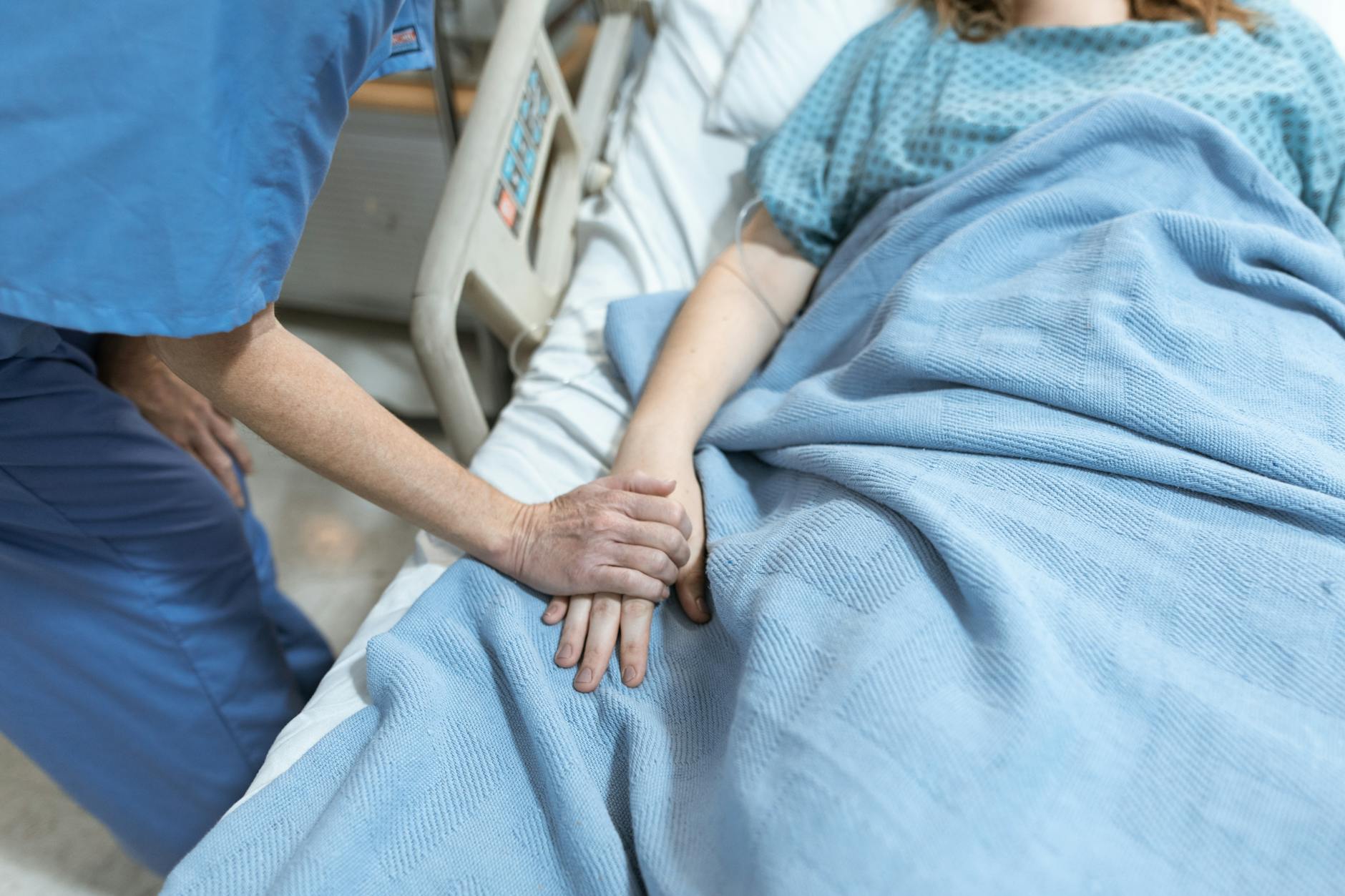
A medical emergency involving someone in your care arrives without warning and demands clear thinking at the precise moment your nervous system wants to shut down. Carers often describe the same experience: a strange frozen feeling, the sense that the room has gone small, and an inability to remember things they know perfectly well. That's not weakness. It's a predictable stress response, and understanding it is the first step to working around it.
What happens in your body during a crisis
When acute stress hits, your prefrontal cortex, the part of your brain responsible for planning and decision-making, goes quiet. Your amygdala takes over instead. The result is a body primed to run or fight, not to speak calmly to a paramedic or locate a medication list. Knowing this in advance means you can build systems that compensate for it, rather than expecting yourself to function perfectly under pressure.
Breathing is the fastest intervention available. Four slow breaths, in through the nose, out through the mouth, physically interrupt the stress cascade. It won't feel instinctive. Do it anyway. The four-count in, hold for seven, out for eight rhythm taught in the 4-7-8 breathing technique is one worth practising before you ever need it in a crisis, so that the muscle memory is already there.
Practical grounding in the moment
Grounding means redirecting your attention from the catastrophic narrative in your head to something concrete and immediate. It doesn't require training or equipment. Try these, in order:
- Name five things you can see in the room.
- Press your feet flat on the floor and feel the pressure.
- Say out loud what you're doing, step by step. "I'm calling the ambulance now. I'm going to open the front door."
Narrating your own actions sounds strange, but it recruits your verbal mind and keeps you from looping on fear. Paramedics and emergency nurses often do exactly this during high-pressure procedures.
What to prepare before a crisis arrives
Presence during a crisis is largely built before the crisis happens. A carer who has prepared a clear emergency document can hand it to a paramedic in 10 seconds. A carer who hasn't will spend those same 10 seconds trying to remember their loved one's medication doses while in a state of shock.
A basic emergency file should include: your loved one's full name and date of birth, their current medications and doses, known allergies, their GP's name and phone number, any relevant diagnoses, and the contact details of the next person to call. Keep a printed copy on the fridge and a digital copy on your phone. The process of building this document is covered in detail in our guide to creating a carer emergency plan, which walks through each section so nothing gets missed.
Knowing what you'll say to the emergency operator also helps. The operator will ask for your address first. Practise it, in your own words, until saying it under pressure feels automatic.
Managing the gap between calling for help and help arriving
This is the window most carers find hardest. You've made the call. Nothing more can be done except wait and monitor. The mind fills that gap with worst-case scenarios.
Two things help. First, stay physically close to your loved one. Touch, if appropriate. Your calm presence genuinely regulates their nervous system through co-regulation, a well-documented physiological process. Second, give yourself one small task. Unlocking the front door. Moving a chair. Finding the medication box. A single concrete action occupies just enough of your mind to prevent free-fall.
Avoid calling additional family members until help has arrived, unless you need a second pair of hands immediately. Managing other people's panic while also managing a crisis doubles your cognitive load at the worst possible moment.
After the immediate crisis passes
The hours after a crisis are often more destabilising than the crisis itself. Adrenaline drops. The reality of what just happened arrives. Carers frequently report shaking, tearfulness, nausea, or a strange emotional blankness in the aftermath. All of these are normal stress responses clearing from the body.
Eat something, even if you have no appetite. Drink water. Sit rather than pace. If there's someone you trust, call them. Not to problem-solve, just to hear a familiar voice.
The invisible weight carers carry through repeated medical scares contributes directly to the kind of grief that has no clear shape. If you care for someone with a long-term condition, you may already recognise this feeling. Our article on the invisible grief of caring for someone with dementia addresses this kind of accumulated, unacknowledged loss directly and honestly.
Building resilience between crises
A carer who is chronically depleted will find it harder to stay present during a medical emergency than one who has maintained some reserves. This isn't about being stronger. It's about physiology. A dysregulated nervous system responds to crisis more severely and recovers more slowly.
Regular nervous system downregulation, through breathwork, rest, time outdoors or body-based practices, makes a measurable difference to how quickly you can return to baseline after a shock. It doesn't need to take long. Twenty minutes of genuine rest does more than two hours of half-rest while scrolling your phone.
If a respite break is on the horizon, use it deliberately. The restoration you build during time away is not a luxury. It's what determines how much you have to give in the moments that count most. Australia's Department of Health recognises carer wellbeing as a health priority, and accessing available supports is one of the most practical things a carer can do to protect both themselves and the person in their care.
Staying present during a crisis is a skill. It's trainable. And the carer who builds the systems, practises the breathing, and maintains their own reserves in between emergencies will find that when the moment arrives, something in them already knows what to do.