
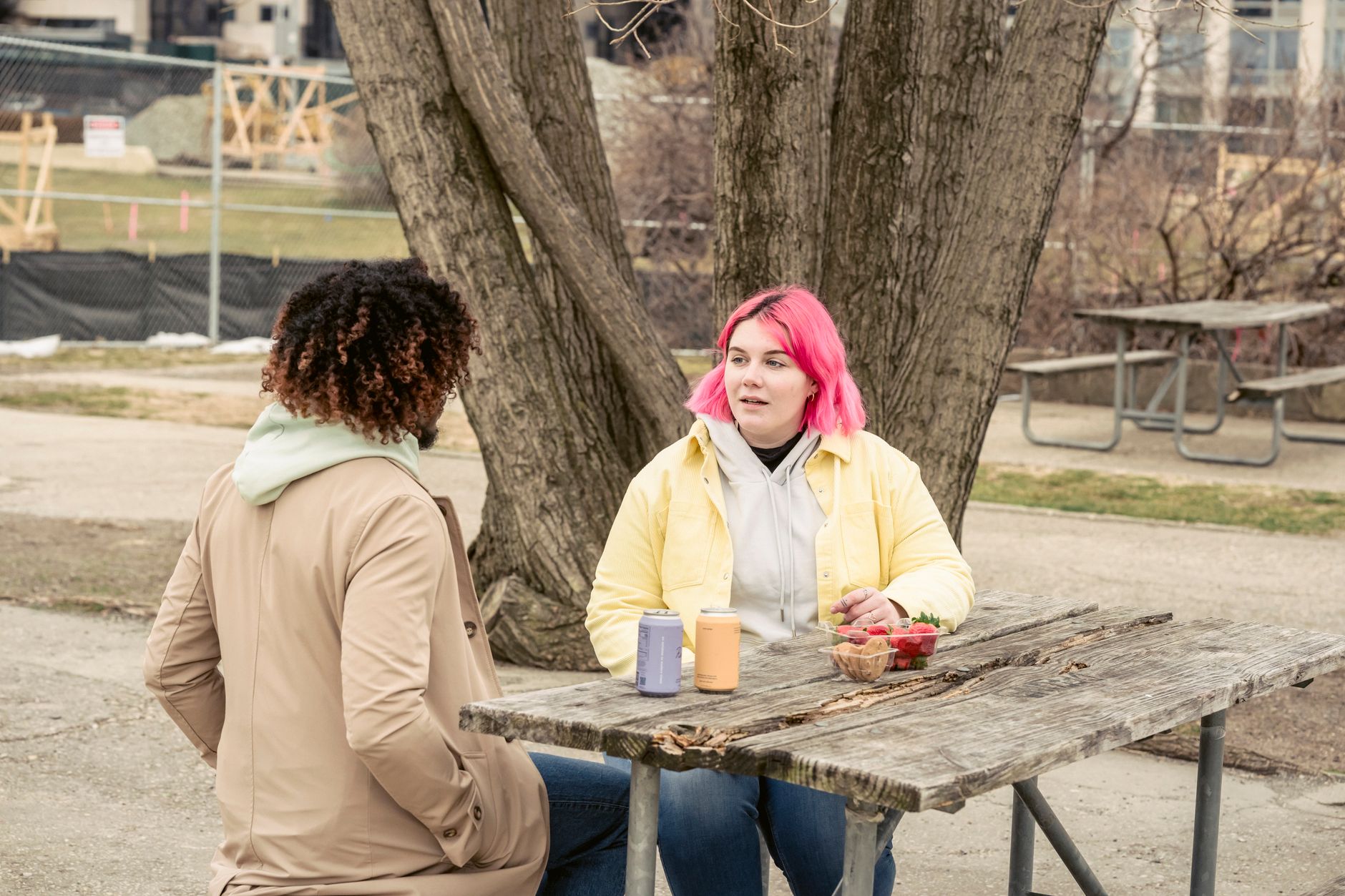
You didn't sign up for conflict. You signed up for quiet mornings, restorative sessions and the particular relief of stepping away from ordinary life. So when friction appears at a retreat, whether with another guest, a facilitator, or even the programme itself, it can feel like something has gone wrong at a fundamental level. It hasn't. Conflict at a retreat is more common than any retreat centre likes to advertise, and how you respond to it matters far more than the fact that it arose.
Why retreats surface conflict more than other settings
Retreats strip away the usual buffers. There's no commute to decompress on, no separate office to disappear into, no phone to stare at. You're eating with the same people, sharing silence with them, sleeping a wall away. That closeness accelerates everything, including irritation. Someone's morning energy feels too loud for where you are. A facilitator says something that lands wrong. A roommate's habits clash with yours in a way that feels enormous in the quiet.
This isn't a failure of the retreat or of you. Shared spaces under emotional conditions bring things to the surface. That's partly the point. The question is what to do when what surfaces involves another person.
The first move: don't react in the moment
The worst time to address friction at a retreat is immediately after it happens. Your nervous system is activated. The other person's may be too. Words chosen in that window tend to escalate rather than resolve, and in a contained retreat environment, an escalated conflict follows you to every meal.
Give yourself a physical gap first. Walk to a different part of the property. Do three slow breath cycles. Sit outside for ten minutes. This isn't avoidance. It's giving your prefrontal cortex enough time to come back online before you open your mouth. A retreat already asks your mind to slow down; use that same principle here.
Distinguish between the conflict types
Not all retreat friction is equal, and conflating them is where people go wrong. There are three distinct types worth separating.
- Preference clashes: someone plays music at the wrong time, chews loudly, or talks during a session you wanted to be silent. These are real irritants but rarely require confrontation.
- Boundary violations: someone enters your space uninvited, pushes an opinion on you after you've declined, or disregards explicit retreat guidelines. These need a direct, calm response.
- Facilitator disagreements: a session goes in a direction you didn't expect or don't consent to, or guidance is given that feels wrong for your body or mind. These need to be addressed with the facilitator or retreat coordinator, not managed privately.
Knowing which type you're dealing with shapes your response. A preference clash rarely needs words. A boundary violation does. A facilitator disagreement usually benefits from a private conversation rather than a group one.
How to address a guest conflict directly
If the friction is with another guest and it rises above a preference clash, a brief private conversation is almost always better than silence or escalation. Choose a neutral time, not immediately after the incident and not at a shared meal. Keep the conversation short and specific.
Name the behaviour, not the person. "When the music is on before 7am it's hard for me to settle" lands very differently from "you're inconsiderate." The first opens dialogue. The second closes it. Most people at a retreat aren't trying to disrupt anyone. They simply haven't noticed the effect of what they're doing.
If the conversation doesn't help, involve the retreat coordinator. That's what they're there for. Retreats are managed environments, and coordinators handle interpersonal friction more often than guests realise. Asking for support isn't weakness and it isn't drama. It's using the structure that exists.
When the conflict is with yourself
Some retreat friction has nothing to do with other people. You booked expecting one thing and got another. The programme feels too structured, or not structured enough. A session brought up something you weren't ready for and now you don't know what to do with it.
This kind of internal conflict is worth sitting with before trying to fix. Resistance at a retreat often points to exactly what the retreat is for. That disorientation in the early hours of a retreat is well documented, and it doesn't always mean the wrong choice was made. It sometimes means the right one was.
Journalling is useful here. Writing out what's irritating you, without editing, often reveals whether the source is the retreat or something it's uncovered. Those are very different problems with very different solutions.
Protecting your experience when conflict can't be resolved
Sometimes a conflict won't resolve cleanly. The other person isn't receptive, the coordinator can't intervene meaningfully, or the friction is baked into the programme itself. In that case, your job is to protect your own experience rather than fix the situation.
This means being deliberate about where you spend your optional time. Sit at the other end of the dining table. Choose different spots in group sessions. Build in solo walks or time in your room as a genuine reset, not as hiding. A retreat with an imperfect social environment can still deliver something real if you stay intentional about it.
If you've booked a private retreat or a solo stay, you have far more control over this. The choice between a group retreat and a private one matters precisely because the social container shapes your entire experience, and some people genuinely recover better without it.
What you take home from it
How you handle conflict at a retreat tells you something worth knowing. If you froze, that's information. If you over-reacted, that's information too. Retreats are compressed environments where your default responses surface quickly, and that includes how you manage friction.
The goal isn't to leave a retreat conflict-free. It's to leave it having responded to difficulty in a way you can respect. That tends to stay with you longer than the absence of trouble.