
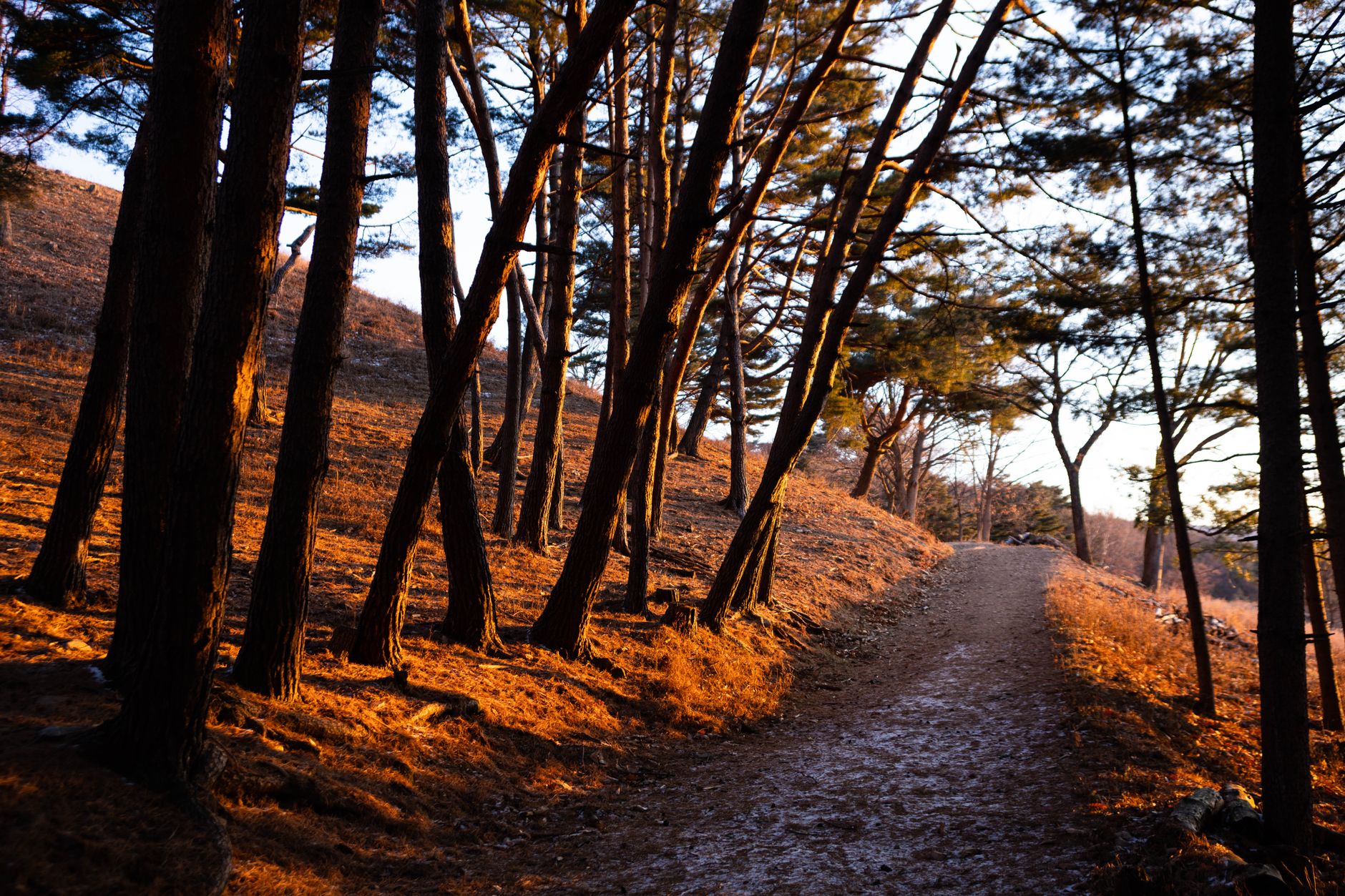
Nature-based retreats occupy a different category from spa weekends or meditation studios. The change of setting isn't just aesthetic. When the nervous system receives sunlight, moving air, birdsong and uneven ground underfoot, it responds in ways that a beautifully designed indoor space simply can't trigger. This isn't a romantic notion. It's a measurable physiological shift, and it's one of the core reasons people leave nature retreats feeling genuinely different rather than just briefly relaxed.
What makes nature a healing environment
The Japanese practice of forest bathing (shinrin-yoku) was studied clinically from the 1980s onward, and the findings pointed consistently in one direction: time in natural environments lowers cortisol, reduces blood pressure and lifts mood. The mechanism isn't fully settled, but the leading theory involves phytoncides, volatile organic compounds released by trees, which appear to increase natural killer cell activity in the immune system. You breathe the forest in, and the forest changes you at a cellular level.
Beyond the chemistry, nature imposes a particular kind of attention. It's diffuse, unfocused, panoramic. Psychologists call this "soft fascination," and it contrasts sharply with the directed attention that screens, meetings and deadlines demand. Soft fascination restores cognitive capacity. A walk along a cliff face or a morning watching the tide isn't passive. It's actively rebuilding something depleted.
How a nature-based retreat differs from a standard wellness programme
A conventional wellness retreat might include yoga classes, massage, clean meals and guided meditation. These are genuinely useful. But they happen in a container, often indoors, often scheduled, often facilitated. A nature-based retreat uses the environment itself as the primary therapeutic agent. The facilitator steps back. The landscape steps forward.
This shifts the experience in a few concrete ways:
- Unstructured time expands. Nature retreats tend to include longer stretches of guided wandering, silent walks or open time outdoors, rather than back-to-back sessions.
- The senses are addressed differently. Texture, temperature, smell and sound all become part of the experience in ways that indoor environments can't replicate.
- The body is included from the start. Even slow walking on natural terrain engages balance, proprioception and breath in ways that sitting in a meditation hall doesn't.
For people who find stillness difficult, nature retreats often provide an easier entry point. Movement through landscape holds the mind without demanding anything of it.
Why coastal settings work particularly well
Coastlines have their own specific effects. The combination of negative ions produced by breaking waves, the rhythmic visual input of the ocean and the drop in environmental noise complexity all point toward parasympathetic activation, the state where the body rests, digests and repairs. People who live near the coast report higher wellbeing scores than inland populations at equivalent income levels, a finding that has held across multiple large studies.
Rainbow Beach sits inside the Cooloola National Park corridor, which means the natural environment here is unusually intact. The coloured sand cliffs, the national park heathland and the open surf beach each offer a different quality of space. A morning on the beach at low tide feels nothing like an afternoon in the sheltered bush behind it. Variety across a single location is part of what makes a coastal nature retreat so effective: the environment keeps shifting, and so does the nervous system's response to it.
Spirit of Rainbow offers retreat and Rainbow Beach accommodation set within this landscape, giving guests direct access to the kind of coastal nature environment that supports genuine restoration rather than temporary distraction.
What to expect from the first 24 hours
The first day of a nature-based retreat is rarely the most profound. The mind arrives carrying its usual cargo: unfinished tasks, background anxiety, the habit of checking. Most people spend the first several hours processing the transition. This is normal, and it's worth knowing in advance.
By the second morning, something shifts. Sleep in a quiet natural environment tends to deepen. Waking to birdsong rather than an alarm produces a different physiological start to the day. Appetite simplifies. The pull toward screens weakens without effort. The body begins to set its own pace, and that pace is almost always slower than the one it arrived with.
If you're preparing for your first experience of this kind, the article on how to prepare for your first retreat when anxiety is part of the picture addresses the specific nervousness that can accompany the unknown, particularly useful if stillness or unstructured time feels uncomfortable rather than appealing.
Carrying the experience back into ordinary life
The question after any nature retreat is how much of it transfers. Some of it doesn't, and that's honest. The coastline isn't in your backyard. The bird calls aren't there at 6am on a Tuesday in the city. But certain things do transfer, because what the retreat actually changed was a relationship: the relationship between your nervous system and certain kinds of sensory input.
Even five minutes outdoors without a phone, in a park or a garden or beside a creek, can activate the same soft fascination response. The retreat trains the body to find that gear. Once you know what it feels like, you can return to it in smaller doses. The article on how to extend a retreat mindset into your everyday routine goes into this in practical detail, covering specific habits that help the reset outlast the departure date.
Nature-based retreats don't fix anything. They create conditions. The body, given the right environment and enough time, does the rest.