
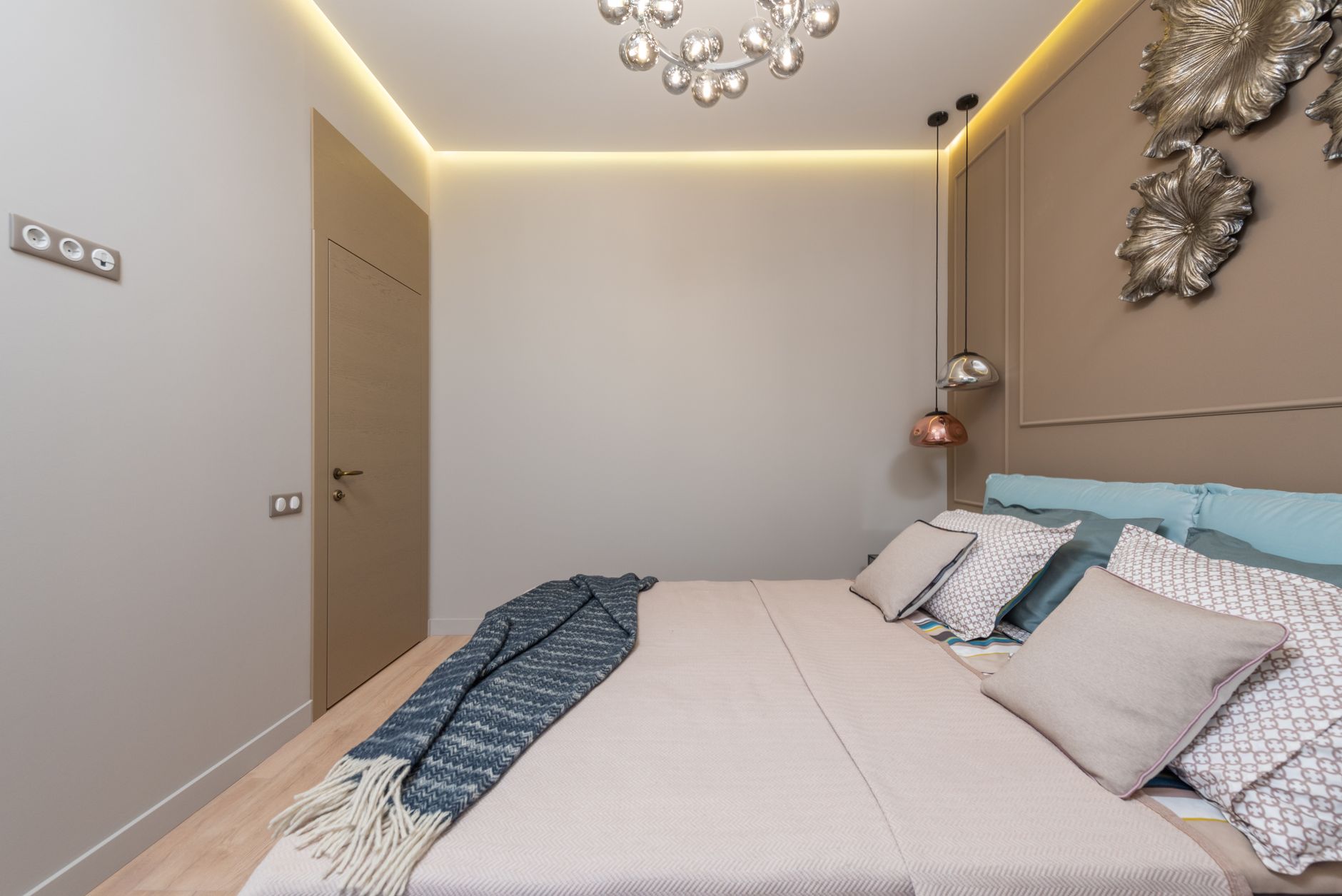
A calming bedtime environment isn't a luxury add-on. It's one of the most direct levers you have over your sleep quality, and most people never pull it. You can follow every piece of sleep advice going and still wake at 2am if your bedroom is working against you. The space itself matters.
Why your bedroom environment shapes sleep so directly
Your nervous system reads the room before you do. Light levels, temperature, sound and even scent send signals that either push your body toward rest or hold it in a state of low-level alertness. This isn't abstract: your brain's production of melatonin drops in response to blue-spectrum light, which is why a bright overhead lamp at 9pm quietly delays sleep onset even if you feel tired. The environment acts on your biology whether you're paying attention to it or not.
Room temperature is the factor most people underestimate. A core body temperature drop of roughly 1 to 2 degrees Celsius triggers the physiological shift into sleep. A bedroom that stays warm blocks this process. Most sleep researchers point to 18 degrees Celsius as the upper end of the useful range, though 16 to 17 degrees suits many people better. If you can't control your room temperature precisely, a warm shower before bed achieves the same drop through a different mechanism: your body cools rapidly after you step out.
Light: the most controllable signal in the room
Bright overhead lighting in the hour before bed is one of the clearest ways to disrupt your wind-down. It's not just screens. A bare bulb, a bright bedside lamp or a bathroom light left on while you brush your teeth all carry enough intensity to suppress melatonin. Switching to warm-toned, low-intensity light in the evening costs almost nothing and pays back quickly.
Blackout curtains or a good sleep mask matter just as much on the other side of sleep. Dawn light that creeps in at 5am may feel pleasant, but it ends sleep earlier than your body needs, particularly in summer. If you're in a coastal town like Rainbow Beach, where sunrise arrives early and the light off the water is intense, even a modest light block in the bedroom makes a measurable difference to morning sleep depth.
One practical step: replace any bulb in your bedroom with a warm white (2700K or lower) option and put it on the dimmest setting available. Use that as your only light source from 8pm onward. The shift in how quickly you feel genuinely drowsy will surprise you.
Sound and what to do with it
Silence isn't always the goal. Intermittent sound, a car passing, a door closing, a neighbour's television, is more disruptive than consistent background noise because it creates spikes in your brain's threat-detection activity. Continuous low-level sound, whether that's a fan, a white noise machine or a rain recording, can actually anchor sleep more effectively than a completely quiet room because it masks those spikes.
If your bedroom is genuinely quiet but you still find your mind running, the problem is rarely the room. It's more likely a wind-down routine issue upstream. If you haven't looked at how to build an evening wind-down routine that actually works, that's worth reading alongside the environment changes here. The two work together: a good routine prepares you, and a good environment receives you.
Scent as a calming signal
Scent is the one sense with a direct pathway to the brain's limbic system, which processes emotion and memory. Used consistently, a particular scent in the bedroom becomes a conditioned cue: your nervous system starts associating it with sleep and begins the wind-down process automatically when it registers it.
Lavender is the most studied option. Research consistently shows it reduces heart rate and blood pressure in the short term, both useful in the transition to sleep. Roman chamomile and cedarwood have smaller but real supporting evidence. A diffuser running for 20 to 30 minutes before you get into bed is enough. You don't want strong scent while you're actually sleeping. If you're curious about building a broader aromatherapy practice, aromatherapy at home: how to use essential oils safely covers safe use and dilution in detail.
Bedding and tactile comfort
Your bedding directly affects thermoregulation throughout the night. Synthetic materials trap heat and moisture; natural fibres like cotton, linen and bamboo wick moisture and breathe. Linen, in particular, gets better the warmer the climate. It stays cool to the touch and regulates temperature more actively than cotton. A heavier blanket worn lightly on top of breathable sheets (rather than a thick duvet) gives the weight some people find calming without the heat trap.
Pillow support is often overlooked as an environment factor, but neck discomfort from a poorly positioned head wakes people and is rarely attributed to the pillow. A pillow that keeps your spine neutral when lying on your side is a different shape from one that suits back sleeping. Matching your pillow height to your sleep position is a small change with a disproportionate effect.
Reducing visual clutter
A bedroom that doubles as a home office, a laundry storage area or a general dumping ground keeps your brain in a low-level problem-solving mode. Clutter is a visual to-do list. Your eyes scan it even when you don't intend to. Clearing the surfaces in your bedroom, even temporarily before sleep, removes those cues and allows the room to register as a space for rest rather than work.
This doesn't require a minimalist aesthetic. It requires that the last thing your eyes see before you close them isn't a pile of unread mail or a half-finished project. Keep one or two things on your bedside table that carry calm associations: a book, a plant, a small object that means something pleasant. The rest can live elsewhere.
Putting it together without overwhelm
Don't try to overhaul everything at once. Pick one element, run it for a week and notice the difference. Temperature is often the fastest win if you've never deliberately cooled the room. Light is the next. Scent compounds over time as the association builds. Sound management is worth addressing if intermittent noise is breaking your sleep mid-cycle rather than preventing the onset of it.
If you're working on sleep as part of a broader effort to look after yourself, these environment changes pair well with the natural sleep habits covered in how to improve sleep naturally. The habits and the environment reinforce each other. One without the other is doing half the work.
Your bedroom is the one space in your home that should be unconditionally on your side. Set it up that way.