
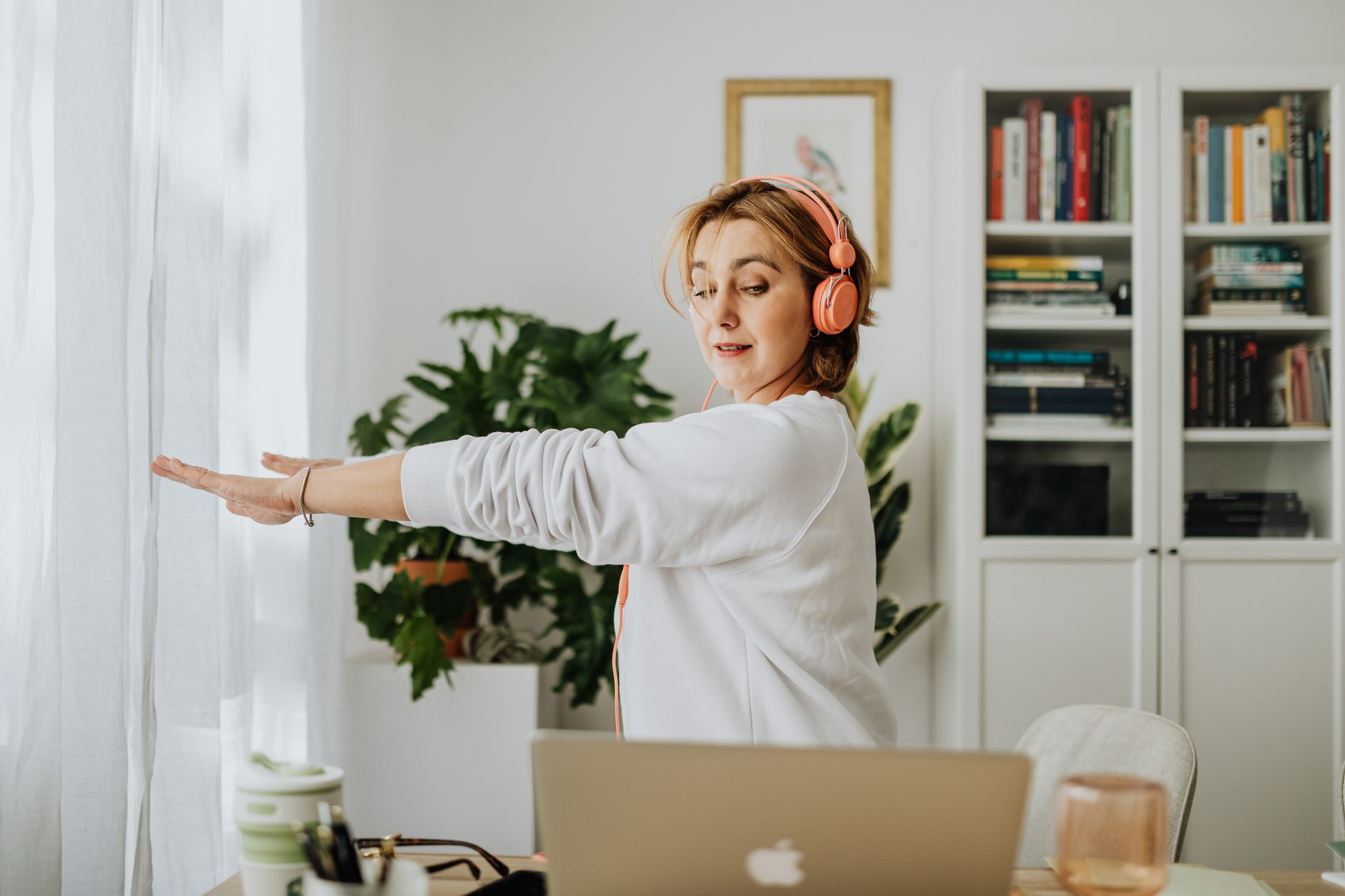
A movement snack is exactly what it sounds like: a short, intentional burst of physical activity taken between longer periods of sitting. Not a workout. Not a walk around the block that requires changing shoes and finding your keys. Just 2 to 5 minutes of deliberate movement, repeated a handful of times across the day. Research published in journals like Nature Medicine and Medicine & Science in Sports & Exercise has found that this kind of interrupted sitting pattern reduces cardiovascular risk, improves insulin sensitivity and supports mood regulation more effectively than one longer session bookended by hours of stillness.
Most people understand, in theory, that sitting for eight hours is bad. The problem isn't knowledge. It's that the alternative feels like an interruption rather than a feature of the day. Movement snacks fix that framing.
Why sitting continuously does more damage than inactivity alone
The body wasn't designed to hold a single posture for hours. When you sit without interruption, circulation slows, the lymphatic system stagnates, hip flexors shorten and the muscles responsible for postural support switch off. None of this is reversed by a 45-minute gym session at 6am if you then sit motionless from 8am to 5pm. The damage from prolonged sitting is largely independent of how much you exercise at other times. That's the key finding that shifted how exercise scientists think about daily movement, and it's what makes movement snacks a genuinely useful tool rather than a workaround for people who won't commit to a routine.
This connects closely to how your nervous system regulates itself through the day. How you support your nervous system on high-stress days matters, and physical stillness is one of the least-discussed contributors to that dysregulation. Movement, even brief movement, shifts the nervous system from a sympathetic (alert, reactive) state toward a more balanced one.
What counts as a movement snack
Almost anything qualifies, as long as it's deliberate, brief and repeated. The threshold is low by design. A few examples that actually work in a home or office setting:
- 10 bodyweight squats at your desk before refilling your water bottle
- A 90-second walk up and down stairs between calls
- Standing and doing shoulder rolls, neck circles and wrist extensions after finishing a document
- A set of calf raises while waiting for the kettle to boil
- 3 minutes of gentle stretching at the point in the afternoon when concentration fades
What matters isn't intensity. It's frequency and intention. A movement snack taken without thinking doesn't count. The deliberateness is half the point: you're training your brain to treat stillness as temporary rather than as the default state.
How to build the habit without relying on motivation
Motivation is unreliable. Anchoring works. The most effective approach is to attach a movement snack to something that already happens reliably in your day. Before every coffee. After every video call. When you finish a writing task. The trigger doesn't need to be elaborate. It just needs to already exist.
Start with two anchors. Not five. Two reliable ones that you actually do will compound into a genuine habit faster than an ambitious plan you abandon by Wednesday. Once two feel automatic, typically within two to three weeks, add a third.
Timer-based reminders help some people and actively irritate others. If a phone alert every 45 minutes will make you resentful of the whole project, don't use one. Environmental cues work better for many people: a resistance band left on the desk, a sticky note on the monitor, a water glass kept on the far side of the room so refilling it requires standing up.
The best movement snacks for different kinds of sedentary work
Not all desk work creates the same physical stress. Writing and reading tend to load the neck and upper back. Screen-heavy design work strains the eyes and locks the shoulders forward. Phone-based work tightens the forearms and wrists. Choosing movement snacks that address the specific strain of your work makes each one more useful.
For neck and upper back tension: chin tucks, thoracic extensions over a chair back, and slow neck rotations. For tight hip flexors from sitting: standing hip flexor stretches, glute squeezes, and slow lunges held for 20 seconds each side. For wrist and forearm fatigue from typing: wrist circles, finger spreads, and a forearm stretch with the arm extended and palm pressed gently downward. For eye strain: the 20-20-20 rule (every 20 minutes, look at something 20 feet away for 20 seconds) paired with standing up at the same time.
How movement snacks support your broader wellness rhythm
Movement snacks work best as part of a day that already has some structure around energy and recovery. If you're also thinking about how to build a weekly rhythm that supports your wellbeing, movement snacks are a natural fit for the daily layer of that rhythm. They don't replace longer exercise, sleep, or deliberate rest. They fill the gaps between those things so the gaps don't undo them.
One underappreciated effect of consistent movement snacking is what it does to the late afternoon slump. That 2pm to 3pm drop in concentration is partly circadian, but it's also driven by hours of physical stillness lowering circulation and, with it, oxygen delivery to the brain. A 3-minute movement snack at 2pm, repeated daily, often reduces that slump more noticeably than a second coffee, without the cortisol spike that delays your evening wind-down.
A simple starting structure for your first week
If you want a concrete starting point, try this structure for five weekdays. Morning: one movement snack before you sit down to work (squats, a short stretch routine, anything that signals to the body that the day has started physically). Midday: one snack when you'd otherwise eat lunch at your desk. Mid-afternoon: one snack at the point when your focus starts to soften. That's three deliberate interruptions to sitting. Most people find this genuinely manageable and notice an effect on energy and mood within the first few days, not weeks.
The goal isn't transformation. It's interruption. Sitting is the default; movement snacks make it less so. That shift, small as it sounds, is one the body notices in very concrete ways.