
Seasonal eating means choosing foods that are grown and harvested at the time of year you're actually eating them. It sounds obvious, but most of us have drifted so far from this rhythm that we buy the same grocery items in July that we buy in January, without thinking twice. The shift back to seasonal choices is one of the most grounded, accessible forms of holistic health habits you can build into everyday life, and it costs less than most supplements.
Why seasonal eating supports the body differently
Fruits and vegetables picked at peak ripeness carry more nutrients than those harvested early and shipped long distances. A Queensland mango in December is nutritionally different from the same variety flown in from overseas in June. That difference shows up in vitamin C content, antioxidant levels and flavour. Your body registers it too.
Traditional health systems, including Ayurveda and traditional Chinese medicine, have long held that food grown in a particular season is suited to what the body needs in that season. Warming, dense root vegetables in winter. Light, hydrating fruits in summer. It's a pattern that holds up well when you look at it through a modern nutritional lens as well.
There's a nervous system angle here too. Eating meals built around fresh, whole, seasonal produce tends to reduce reliance on heavily processed foods, and that shift alone affects how you feel. If you're working on eating for your nervous system on high-stress days, seasonal whole foods are a natural foundation to build from.
What seasonal eating looks like in south-east Queensland
Living near Rainbow Beach puts you in one of Australia's most abundant growing regions. South-east Queensland doesn't have four distinct European seasons, but it does have two clear phases: a wet, humid summer and a cooler, drier winter. Each brings different produce to peak condition.
In summer (roughly November through March), local abundance includes:
- Mangoes, papaya and lychees from the Sunshine Coast hinterland
- Zucchini, cucumber and capsicum
- Tomatoes and eggplant
- Fresh herbs like basil and Vietnamese mint
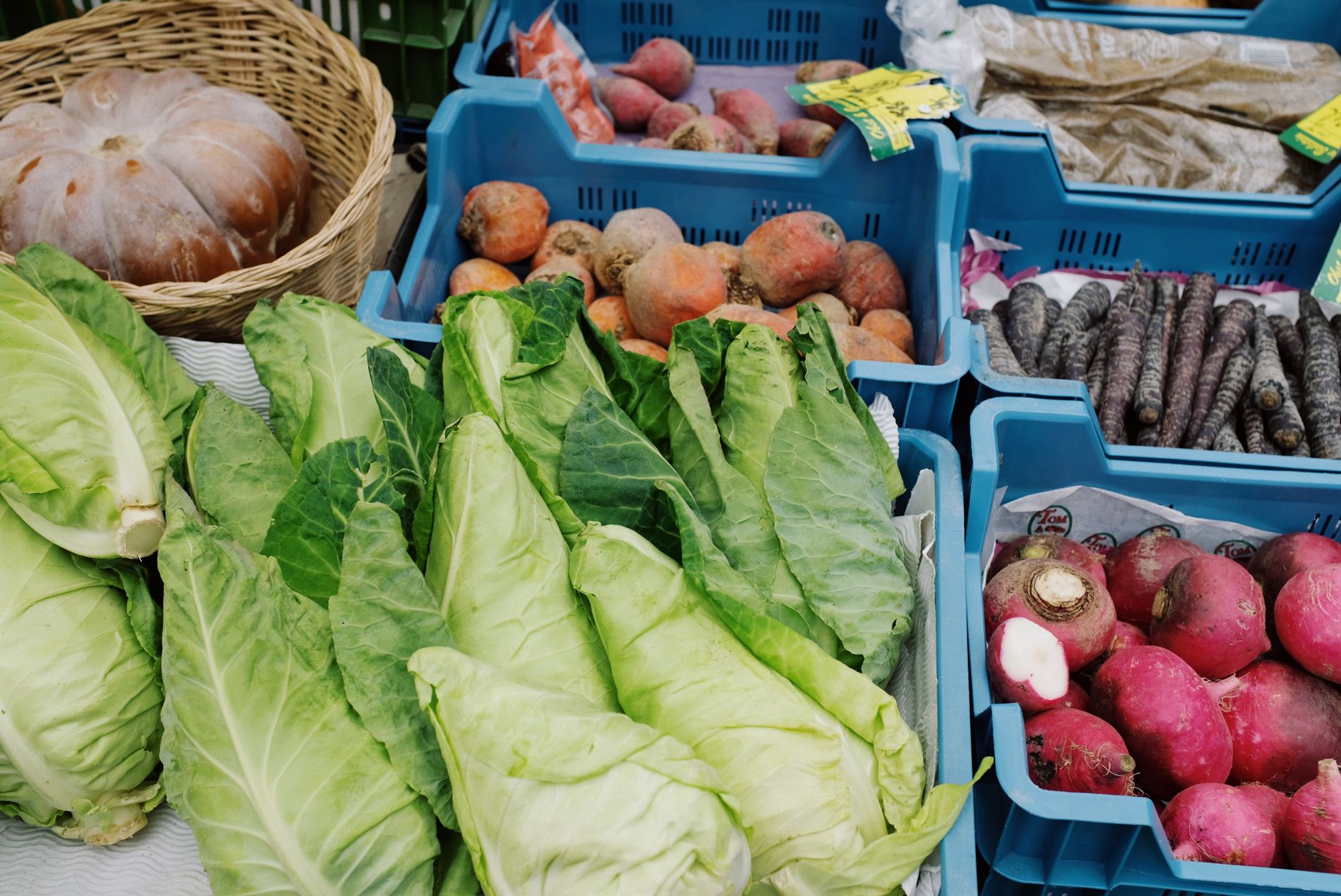
In winter (May through August), the cooler months bring sweet potato, pumpkin, leafy greens, broccoli, cauliflower and citrus. These denser, slower-digesting foods support sustained energy during cooler days and are easier on the gut.
The shoulder months of April and September to October offer the most variety, with both summer and winter crops overlapping at markets. This is the ideal time to experiment.
How to actually start without overhauling your whole diet
Start with one meal. Not the whole week. Pick your lunch or dinner and ask: what's in season right now that could form the base of this?
The simplest practical step is visiting a local farmers market rather than a supermarket for your produce. In Rainbow Beach and the surrounding Cooloola Coast region, markets in Gympie and Noosa are accessible and run regularly. Vendors at these markets sell what's actually ready to harvest, which removes most of the guesswork.
A second step is noticing price. Seasonal produce is almost always cheaper because supply is high and transport is short. When a vegetable is suddenly expensive or hard to find, that's a signal it's out of season for your region. When it's abundant and cheap, it's in season. The market tells you, if you pay attention.
Don't aim for perfection. Seasonal eating isn't about refusing a banana in winter. It's about tilting your plate toward what's thriving locally and letting that guide your choices most of the time.
The gut and mood benefits worth knowing about
Rotating produce across seasons naturally diversifies the types of fibre, polyphenols and plant compounds you consume. That variety feeds different strains of gut bacteria, which supports a more resilient microbiome. The relationship between gut health and your mental state is well established: a more diverse microbiome is associated with lower rates of anxiety and depression, and steadier mood across the day.
This is one of the clearest connections between gut health and mental wellbeing. Seasonal eating won't fix clinical depression, but it can quietly shift the conditions in your gut that influence how you feel.
The other benefit is simply that food tastes better in season. A sun-ripened tomato in February requires no dressing. A winter pumpkin roasted with olive oil and cumin needs nothing added. When food tastes good on its own, you tend to eat it more slowly, more mindfully and with more satisfaction. That matters.
A simple seasonal framework to keep in your head
You don't need a detailed seasonal eating calendar. A rough framework works well.
In summer, eat for cooling and hydration: water-rich fruits, light proteins, fresh salads and herbs. In winter, eat for warmth and grounding: slow-cooked legumes, root vegetables, warming spices like ginger and turmeric, and citrus for immune support. In the shoulder seasons, experiment freely and buy whatever looks best at the market.
That's the whole system. It works because it removes decision fatigue and anchors your food choices to something real and observable, rather than another set of rules to track.
Seasonal eating isn't a trend. It's a return to a rhythm most human bodies have always operated within. Getting back to it doesn't take a plan or a programme. It takes noticing what's ripe.