
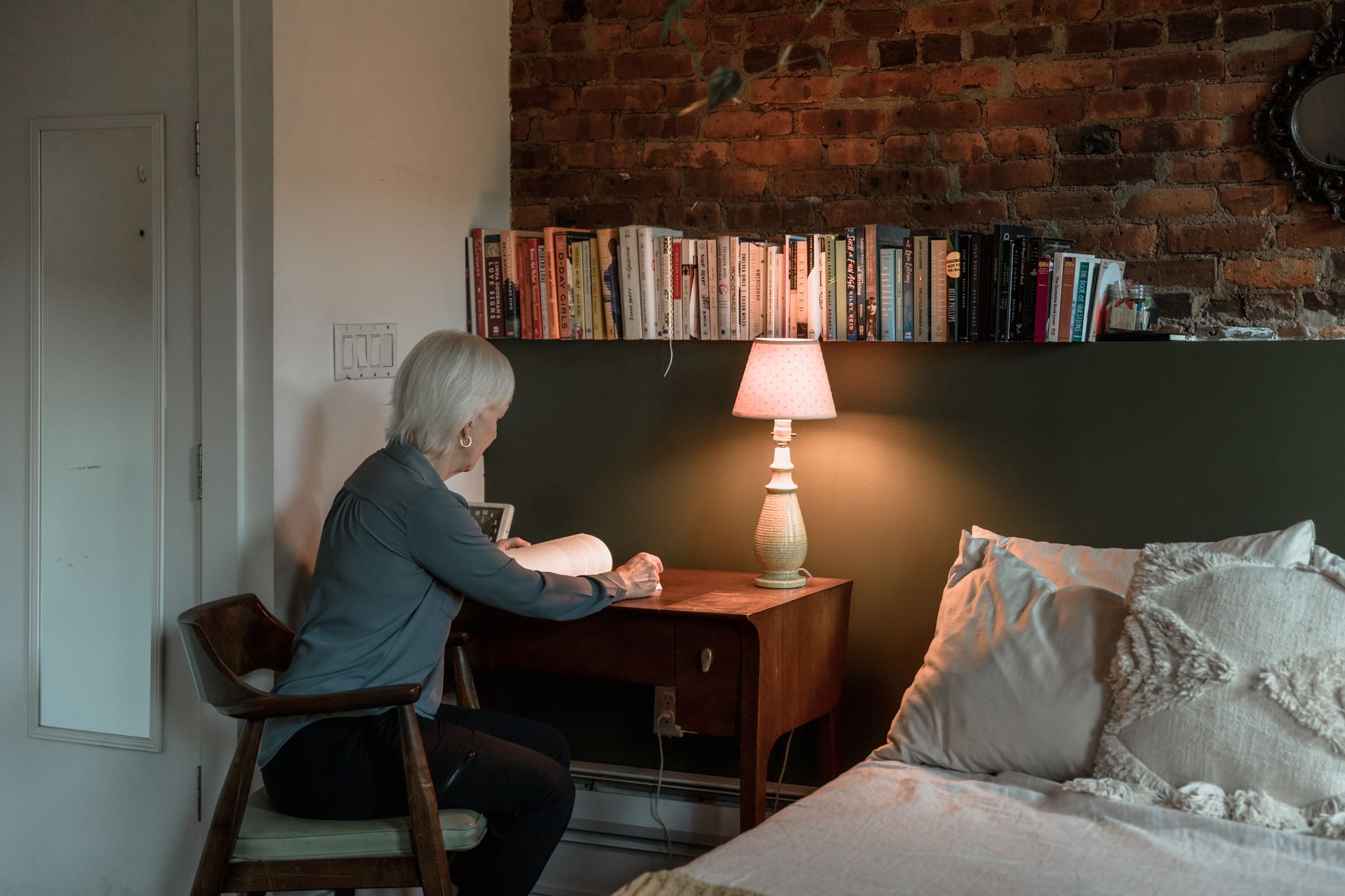
A wind-down reading ritual is one of the most underrated tools for better sleep, and it's one that most people get subtly wrong. The common version involves grabbing whatever's closest, reading until your eyes droop, and then wondering why you still take 40 minutes to actually fall asleep. The deliberate version is different. It uses reading as a transition tool, a signal to your nervous system that the day is genuinely over.
Why reading works differently from other wind-down habits
Reading fiction, in particular, requires a specific kind of focused attention. It pulls your mind into a world that isn't your own, which is precisely what makes it useful before bed. Unlike a podcast or a television show, a book doesn't flicker, doesn't interrupt itself with notifications, and doesn't auto-play the next thing. You control the pace. That autonomy matters. Your nervous system reads passivity as safety, and a slow, chosen pace is a form of quiet self-regulation.
Compare that to scrolling, which delivers variable reward on a short loop. Each refresh is a small unpredictable outcome. That loop is genuinely alerting, not in a dramatic way, but enough to delay sleep onset. Reading swaps that loop for a steady, predictable narrative. The difference in how you feel 20 minutes later is real. Pairing reading with other deliberate habits, like those in a broader evening wind-down routine, compounds the effect considerably.
Choosing the right material
Not all reading is equal here. There are three things worth avoiding in a wind-down reading ritual: anything you need to remember tomorrow (work documents, non-fiction you're studying), anything emotionally provocative (thrillers with brutal cliffhangers, news), and anything that requires active problem-solving. These keep your prefrontal cortex busy in ways that delay the transition to sleep.
What works best is absorbing but gentle. Literary fiction with rich description. Travel writing. Comfort re-reads of books you already love. Essays on nature or place. Some people do well with slow non-fiction on subjects completely removed from their daily work. The test is simple: after 15 minutes, do you feel slower and heavier, or more activated? Let that answer guide your shelf choices.
Physical books are preferable to e-readers with backlit screens, though a warm-toned e-ink device is a reasonable second choice. The key is keeping screen brightness low and colour temperature as warm as possible. The Sleep Foundation notes that blue-spectrum light suppresses melatonin production, so even modest adjustments to screen warmth make a measurable difference.
Building the ritual itself
A reading ritual isn't just the act of reading. It's the sequence around it. The transition matters as much as the reading itself. Here's a structure that works for most people:
- Set a consistent start time, ideally 30 to 45 minutes before you want to be asleep.
- Dim the room lighting before you pick up the book. Bright overhead lights signal daytime to your body.
- Make a warm, non-caffeinated drink. The act of making it is itself a ritual marker.
- Read in the same spot each night if possible. Physical location becomes a cue your nervous system learns.
The consistency is what gives the ritual its power. After a few weeks, reaching for your book becomes a conditioned signal that sleep is coming. Your body starts preparing before you've read a single page.
What to do when your mind won't settle
Some nights the words won't land. You read the same paragraph three times without it registering. This usually means your nervous system is still running high from the day, and asking it to absorb narrative is too much of a jump. On those nights, don't force the fiction. Try something with very short units: a poetry collection, a book of brief essays, a nature journal you can dip into at random. Short units require less sustained focus, and they still provide the transition effect you're after.
If the problem is recurring anxious thoughts breaking your concentration, it's worth looking at whether you have a consistent outlet for those thoughts earlier in the evening. A worry window built into your late afternoon or early evening can offload the mental chatter before it follows you to bed, making the later reading ritual far easier to settle into.
Common mistakes that undermine the ritual
The most common mistake is reading in bed with the overhead light on. Bright light in the bedroom at any point close to sleep confuses the body's internal clock. Use a bedside lamp, ideally with a warm bulb rated below 2700K colour temperature.
The second mistake is treating reading as a passive activity that happens to occur near sleep, rather than a deliberate transition you're building. The ritual framing changes how your body responds. When you treat it as a cue, it becomes one. When you treat it as a last resort after everything else fails, it stays that way.
The third mistake is letting the reading tip over into the small hours because the book is good. This one is harder to solve because it means you've chosen well. Keep a bookmark at your planned stopping point and genuinely close the book there. The ritual's effectiveness depends on ending sleep on something absorbing, not on reading until exhaustion. Your sleep onset, your morning energy, and the next night's ritual all depend on that boundary.
Making it yours
A wind-down reading ritual doesn't require a perfect space or a curated library. A simple lamp, a consistent time, and a book you've chosen for pleasure rather than productivity are enough to start. The ritual builds itself through repetition. Give it three weeks before judging whether it works, because the nervous system conditioning takes that long to establish a reliable cue.
If you're building several wind-down habits at once, keep the reading as the final one, the last thing before the light goes off. It's a natural anchor for everything before it, and it works best when it's the last signal your mind receives before sleep.