
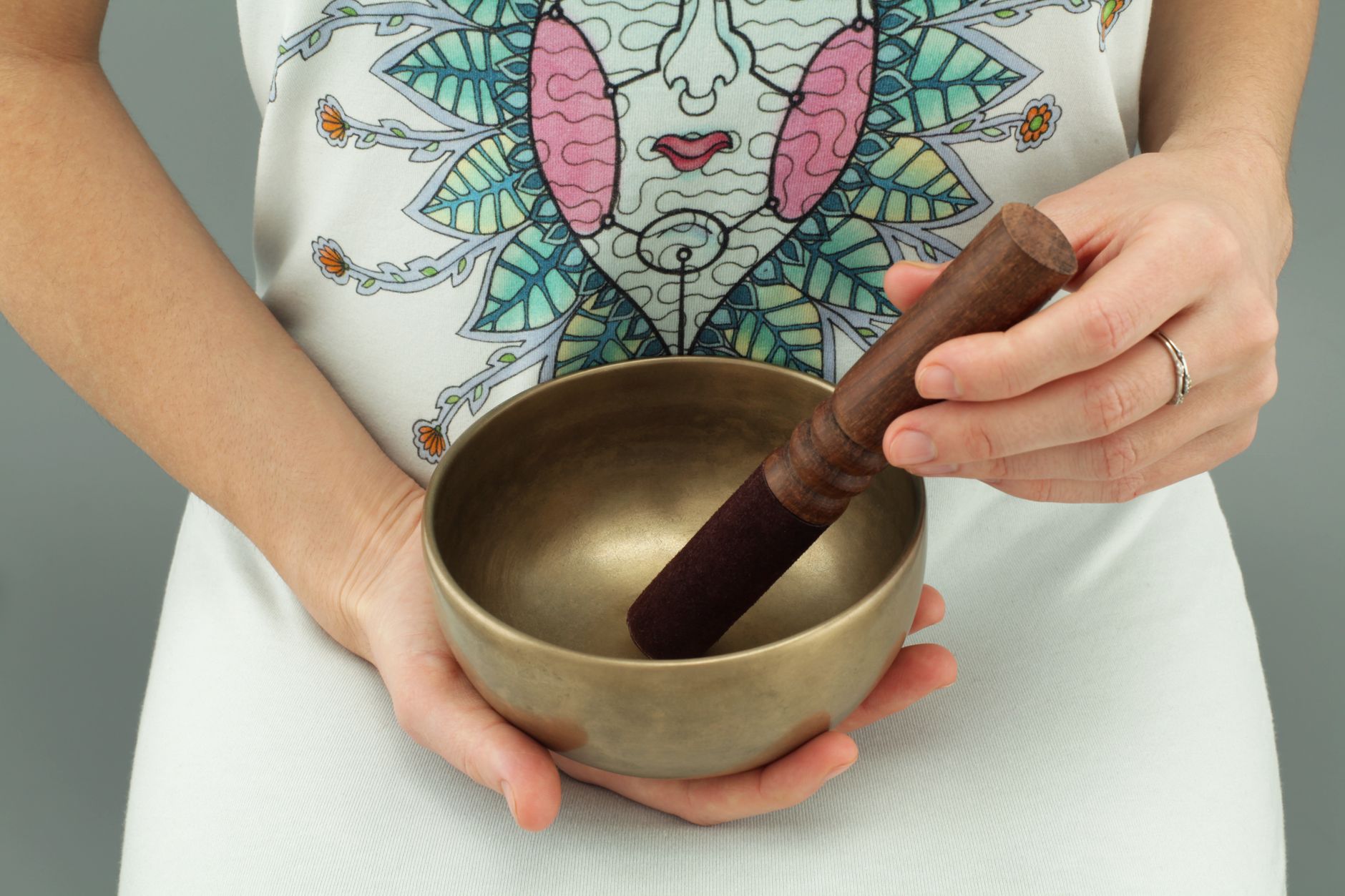
Singing bowl meditation sits at the intersection of sound healing and everyday mindfulness, and it's more accessible than most people assume. You don't need a teacher in the room, a dedicated studio or a shelf full of bowls. One bowl, a wooden mallet, and ten uninterrupted minutes is enough to begin. The challenge isn't acquiring the tool: it's knowing how to use it properly so the sound does something useful, rather than just making noise.
What a singing bowl actually does
A singing bowl produces sustained tones when struck or rimmed with a mallet. The vibrations travel through the air and, when you're in close proximity, through the body itself. This is what distinguishes it from simply listening to recorded music. The physical resonance is part of the effect, and it's why practitioners in Tibetan, Nepalese and Japanese traditions have used metal and crystal bowls for centuries as tools for focus, ceremony and relaxation.
The sound a bowl produces isn't a single frequency. Most bowls generate a fundamental tone layered with overtones that shimmer and shift as the vibration sustains. This complexity gives the mind something to follow without demanding active thought, which is precisely why singing bowl meditation works so well for people who find silent meditation difficult. The sound provides an anchor.
It's worth understanding how this connects to broader sound-based practices. If you've been curious about the difference between individual bowl work and a full-room immersion, the article on sound baths vs singing bowls covers that distinction in detail.
Choosing a bowl for home use
Metal bowls and crystal bowls produce different sounds and suit different intentions. Metal Himalayan bowls, typically made from an alloy of five to seven metals including copper and tin, produce warm, complex tones with long sustain. Crystal bowls, usually quartz, produce clearer, brighter tones that can feel more penetrating. For beginners sitting at home, a mid-sized Himalayan bowl in the 15 to 20 centimetre range is forgiving to play and produces a tone full enough to meditate with.
Don't buy a bowl without hearing it first if you can help it. Tone matters more than appearance. A bowl that resonates in your chest when you strike it will serve you better than one that looks beautiful but falls quiet in two seconds. Many quality Himalayan bowls are available through specialist suppliers like Silver Sky Imports, who stock hand-hammered bowls with documented provenance.
How to strike and rim a bowl correctly
Most beginners either strike too hard or rim too fast. Both mistakes kill the tone.
To strike the bowl: hold it on an open, flat palm. Don't grip the sides or place it on a hard surface; the bowl needs to vibrate freely. Use a wooden or suede-wrapped mallet and tap the upper side of the rim at a 45-degree angle with a relaxed wrist. Firm but not forceful. Let the sound bloom before you do anything else.
To rim the bowl: after striking, maintain gentle, even pressure with the mallet against the outer wall of the rim. Move it slowly around the circumference, like stirring something thick. The bowl will begin to sing after one or two full rotations. Speed and pressure need to stay consistent. Too fast and the sound breaks up; too slow and it fades.
Your non-dominant hand matters too. Keep it still and open under the bowl. Any tension in your body transmits into the bowl and dampens the resonance. Relax your shoulders before you begin.
Building a simple sitting practice
Set up in a seated position on the floor or a chair, with the bowl resting on your open palm at roughly waist height. Close your eyes for a moment before you begin. Take three slow nasal breaths to settle your nervous system before touching the mallet to the bowl. This short preparation shifts you out of task mode and opens your attention.
Strike the bowl once and simply listen. Follow the sound as it rises, sustains and slowly fades. Notice when your mind wanders off the sound. That noticing is the practice itself, not a failure. When the tone fades completely, pause for five to ten seconds, then strike again. Repeat this for five to ten minutes. That's a complete session.
Once you're comfortable with a strike-and-listen practice, introduce rimming. Strike the bowl, let the initial tone settle, then begin to rim. Hold that continuous tone for one full breath cycle, then let the bowl rest. Rimming takes a few sessions to feel natural, but once it does, the sustained tone becomes a reliable meditation anchor.
If you're new to breath-based settling techniques, pairing bowl work with a structured breathing practice can deepen the effect considerably. The nadi shodhana alternate nostril breathing technique works particularly well before a bowl session, as it already quiets the nervous system before sound work begins.
Where singing bowls fit in a broader holistic practice
Singing bowl meditation is not a replacement for other practices: it's a complement. People who already journal, move regularly or work with other complementary therapies often find that bowl work gives those practices more depth. The sustained attention it cultivates carries over into seated meditation, breathwork and bodywork sessions.
Spirit of Rainbow Beach offers a quiet, private sanctuary at Rainbow Beach, QLD, where guests bring their own practices and find the space to deepen them. Whether you're building a home sound practice or looking to explore a broader range of sound healing approaches, starting simply with a single bowl is one of the most honest entry points available.
Keep the bowl clean and dry, store the mallet separately to prevent dampening the metal, and give the practice at least two weeks of daily five-minute sessions before you judge whether it's working. The effect is cumulative, not immediate.