
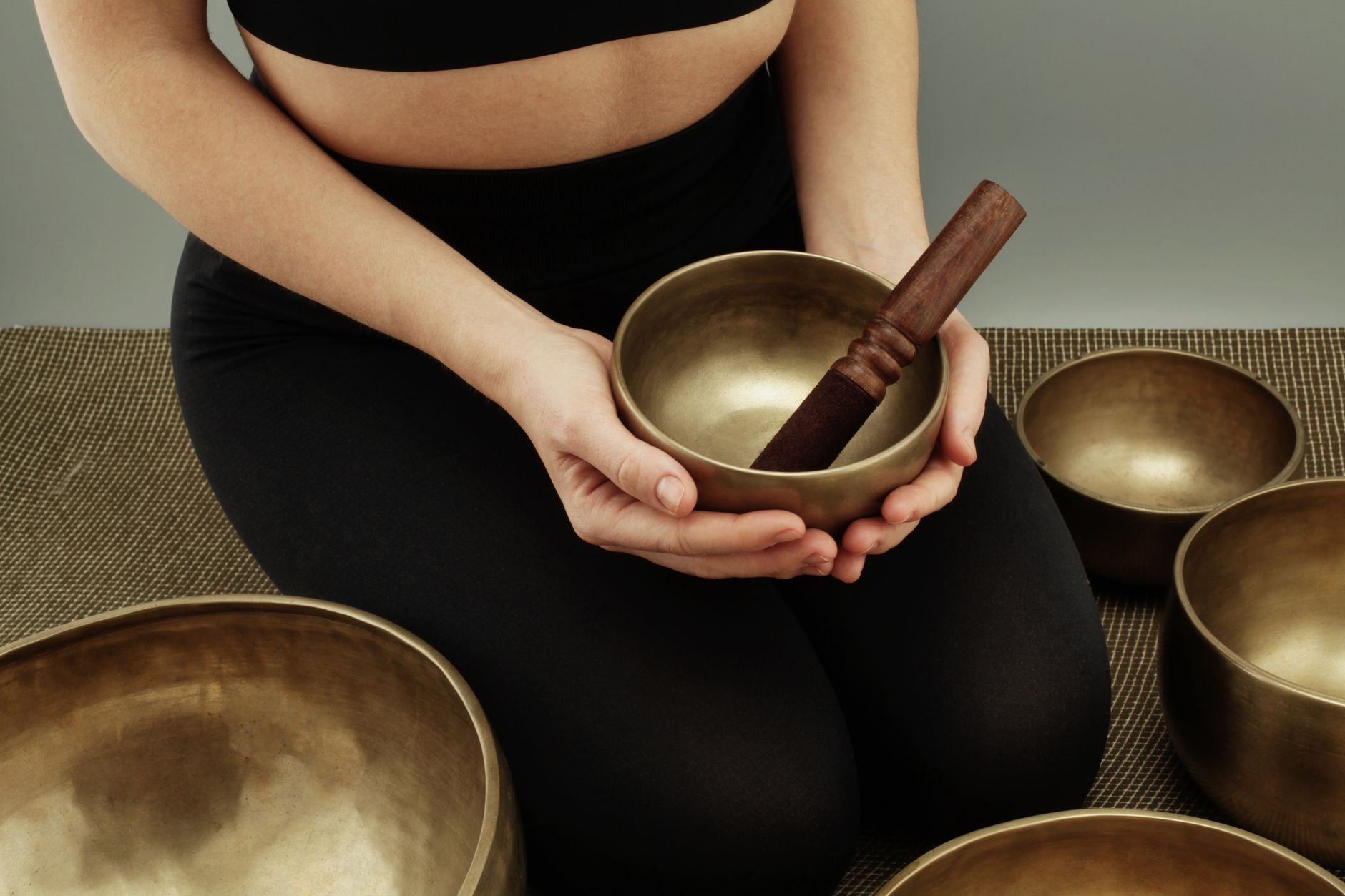
Sound baths and singing bowls both fall under the broader umbrella of sound healing, but they're distinct experiences with different tools, intentions and physical effects. Lumping them together leads people to book the wrong session, or to dismiss both without giving either a fair chance. The difference is worth understanding before you commit to either.
What a sound bath actually is
A sound bath is an immersive group experience. You lie down, usually on a mat or blanket, and a practitioner plays a range of instruments around and above you for anywhere from 20 minutes to over an hour. The instruments vary by practitioner, but typically include Tibetan singing bowls, crystal singing bowls, gongs, chimes, tuning forks and sometimes the human voice. The sound surrounds you from multiple directions. You don't participate. You simply receive.
The term "bath" is intentional. Sound waves wash over and through the body the way water does. The practitioner moves through the space, bringing different instruments close to different parts of your body. Larger gongs generate low, sustained frequencies that you feel more than hear. Chimes cut through at higher registers. The practitioner layers these to create a shifting acoustic environment rather than a fixed note or tone.
Most people find the experience profoundly settling. Some fall asleep. Others report visual imagery, emotional release or a deep sense of spaciousness in the body. It's not meditation in the formal sense, but it produces some of the same effects, particularly a measurable slowing of the nervous system.
What singing bowls are, specifically
Singing bowls are individual instruments, not a practice in themselves. A practitioner (or you, at home) strikes or rims a bowl with a mallet to produce a sustained harmonic tone. Tibetan singing bowls are traditionally made from an alloy of metals, often five to seven, including copper, tin and iron. Crystal singing bowls are made from quartz crystal and produce a cleaner, glassier resonance.
Each bowl is tuned to a specific frequency. Many practitioners use bowls matched to particular chakras or areas of the body: a low C bowl near the root, a higher A bowl near the third eye. The bowl can be placed directly on the body or held nearby. The vibration travels through tissue, bone and fluid, which is part of what makes it different from ambient music.
Singing bowls can be used as one of many tools inside a sound bath, or they can be the sole instrument in a one-on-one session. At home, a single bowl used for five minutes before sleep or meditation is a complete practice on its own.
The key differences, side by side
A sound bath is an experience; a singing bowl is a tool. One is delivered to a group in a dedicated session; the other can sit on your windowsill and take five minutes each morning. Sound baths tend to use a broader frequency range because multiple instruments are involved. Singing bowls used alone produce a narrower, more targeted resonance, which makes them useful for focused bodywork or quiet personal ritual.
Cost and access differ too. A sound bath class in a studio or retreat setting typically runs for 45 to 90 minutes and involves a trained facilitator. A quality Tibetan singing bowl can be purchased for home use, and many practitioners sell recordings to guide you through a session remotely. Neither is superior. They serve different needs and different moments.
Which one is right for you?
Start with a sound bath if you're new to the practice and want to understand the felt sense of sound healing before investing in your own equipment. The group setting provides support, and an experienced facilitator will move through a range of instruments in a way that's hard to replicate alone. Sound baths pair well with other reset practices: they work particularly well at the start or end of a wellness retreat, or after a period of prolonged stress where the nervous system needs something non-effortful to shift it.
If you want a daily practice, singing bowls make more sense. A single bowl is portable, quiet enough for home use and easy to learn. A five-minute bowl session before a breathwork practice or before bed creates a clear sensory signal that helps your body downregulate. You don't need to be a practitioner to use one effectively.
Some people use both: a monthly sound bath for deep reset, and a singing bowl at home for daily rhythm. That's a reasonable approach, and it lets each tool do what it does best.
A note on quality and sourcing
Not all bowls are created equal. Mass-produced bowls pressed from thin sheet metal don't produce the harmonic richness of hand-hammered Tibetan bowls or high-grade crystal bowls. If you're buying one, hold it before you pay for it. Strike it, rim it slowly, and listen for sustain and overtone. A bowl that rings flat or shrill won't serve a practice well. Reputable suppliers will let you hear a bowl before purchase; Silver Sky Imports is one specialist known within the practitioner community for hand-hammered Himalayan bowls with traceable provenance.
For sound baths, look for a practitioner who has completed formal training in sound therapy or has a background in music alongside bodywork. A well-run session won't feel performative or rushed. You should leave feeling quieter than when you arrived.
Where Rainbow Beach comes in
The physical environment matters more than most people expect. Sound travels differently in a calm, natural space: softer surfaces, open air and the absence of city noise all affect how frequencies land in the body. Rainbow Beach offers that kind of environment naturally, and a sound bath or singing bowl session held here lands differently from one in a city studio. Spirit of Rainbow provides quiet, private accommodation in the heart of Rainbow Beach that's well suited to personal sound practice, retreat preparation or simply a few days of intentional stillness away from the noise.
If you're planning time here with wellbeing in mind, it's worth thinking about how each day will feel in the body, not just the itinerary. A short sound practice each morning, combined with the beach, fresh air and rest, creates a rhythm that most people don't get close to in ordinary life.