
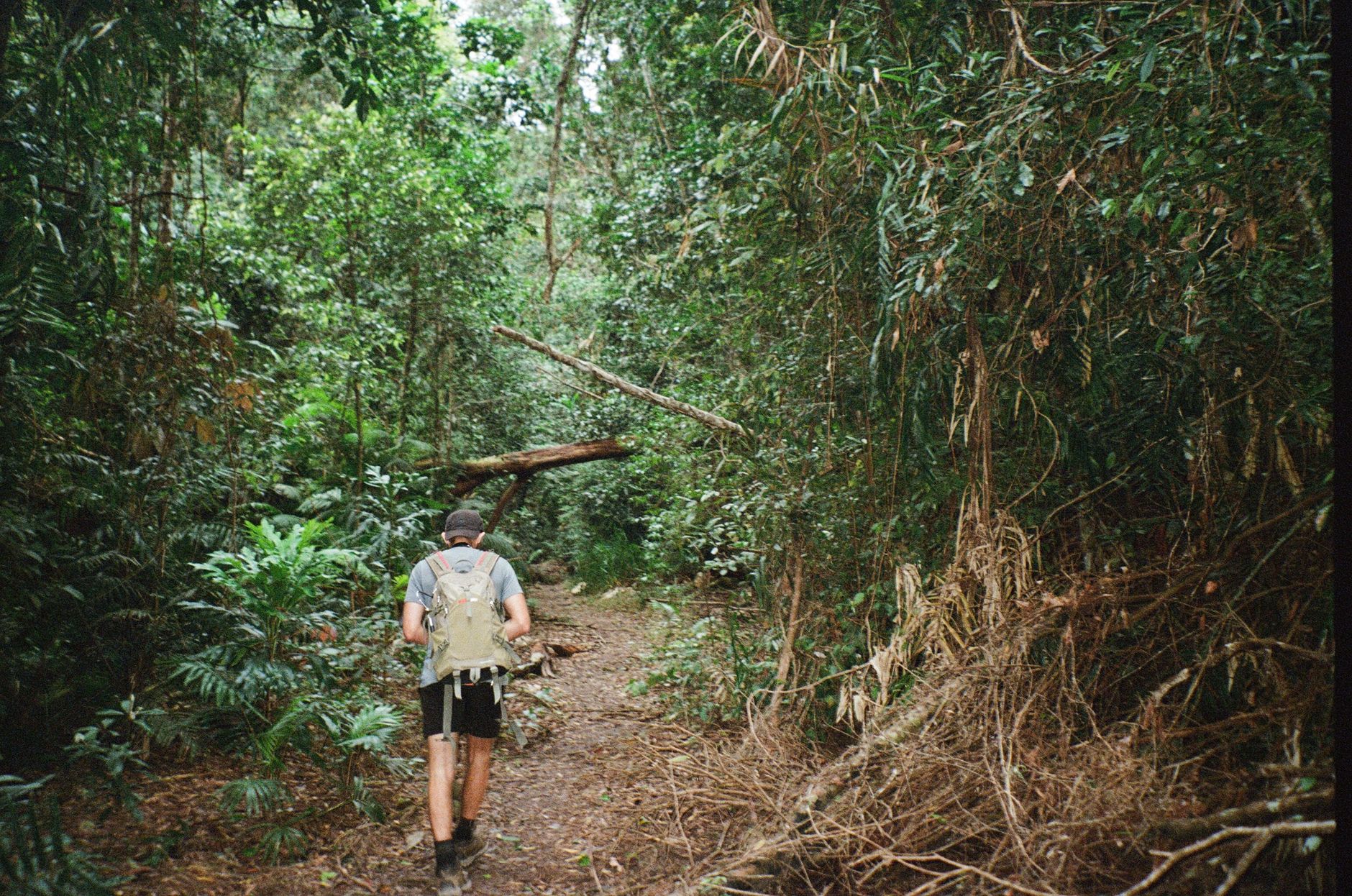
The Cooloola Great Walk starts quietly. You step onto the trail at Elanda Point or Rainbow Beach and the scrub swallows you almost immediately. Within 20 minutes the road noise is gone. What replaces it is birdsong, wind in the wallum heath and, if you time it right, the distant surf. This is one of Queensland's most underrated multi-day hikes, running 102 kilometres through the Great Sandy National Park and finishing near the coloured sand cliffs above Rainbow Beach.
Understanding the route
The track runs roughly north to south, connecting Elanda Point on Lake Cootharaba with Rainbow Beach township. Most walkers do it in 5 or 6 days, camping at four designated campsites along the way: Fig Tree Point, Commissioners Pot, Litoria Camp and Cooloola Wilderness Camp. You can also walk it south to north, though the beach approach to Rainbow Beach at the northern end makes finishing there feel like a genuine arrival.
The terrain changes constantly. You move from open heath country through ancient sand dunes, into tall forest with strangler figs, out to creek crossings, and back into low wallum scrub. The diversity is what makes the walk. One morning you're on exposed ridgeline with views over the Noosa River system; by afternoon you're threading through paperbark swamp. No two half-days feel the same.
Day sections range from 14 km to about 22 km, with the longer days carrying more elevation. Nothing is technically difficult, but the soft sand on the dune sections is genuinely tiring. Factor in at least 30 minutes of extra time per day for sand walking.
What to bring and what to leave behind
Water is the main logistics challenge. Several sections carry no reliable water sources, and Queensland heat makes dehydration a real risk. Carry at least 2 litres minimum between sources and filter or treat any water you collect from creeks. A lightweight filter like the Sawyer Squeeze saves weight and is worth the investment.
The walk is fully exposed on heath ridges and the sand dunes. Sun protection is not optional: a wide-brim hat, sunscreen, long sleeves and UV-rated hiking pants make a measurable difference by day three. Your feet will thank you for trail runners rather than heavy boots. The terrain doesn't demand ankle support, and lighter footwear cuts fatigue over 100-plus kilometres.
Camping gear needs to be self-contained. There are no facilities at Commissioners Pot or Litoria Camp beyond a cleared tent area. Fig Tree Point has a composting toilet and a small shelter. Bring a gas stove, leave no trace principles are strictly enforced in the national park.
Wildlife and what you'll actually see
The Cooloola Coast holds one of the most biodiverse sections of the Great Sandy National Park, and the walk puts you inside it for days at a time. Wallabies are common from dusk. Goannas cross the trail mid-morning, unbothered. Carpet pythons occasionally stretch across the path in the warmer months, usually September through April.
Birdlife is exceptional. If you have any interest in birds at all, the walk rewards it. Rainbow bee-eaters hunt from low perches above the heath, glossy black cockatoos work the she-oaks, and the night jars call from dark. Rainbow Beach itself sits within one of Queensland's most bird-rich corridors, with over 300 species recorded in the surrounding area. Early morning on day one or two, before the heat sets in, is when the heath comes alive with honeyeaters and wrens.
For anyone who wants to take birdwatching seriously, the region around Rainbow Beach has much to offer beyond the trail itself. The birdwatching guide for Rainbow Beach covers the best species and specific spots near the township, which pair well with what you'll see along the walk.
Permits, booking and logistics
Campsite bookings are managed through the Queensland National Parks booking system and are required for all designated sites. Spots fill fast during school holidays and the May to September dry season. Book at least 6 weeks ahead for those windows. The permit fee was $6.75 per person per night as of mid-2026; check the Queensland Parks and Wildlife Service site for current pricing.
You'll need a car shuttle unless you arrange transport at both ends. Several Rainbow Beach locals offer shuttle services, and a handful of accommodation providers near the trailhead can hold your vehicle. The walk ends at the Rainbow Beach township, where food, showers and a cold drink are very close. That proximity to the township is one of the walk's practical advantages: you finish civilised.
If you're combining the walk with time in Rainbow Beach before or after, a few days of rest and exploration around the township is a natural fit. The area rewards slower attention. Anyone arriving without a plan would do well to read through the guide to things to do near Rainbow Beach for nature lovers, which covers options well beyond the famous coloured sand cliffs.
The best time to walk
May through September is the sweet spot. Daytime temperatures sit between 18 and 25 degrees Celsius, the humidity drops, and the creek crossings are usually manageable. Rain is less likely, though not impossible. October to April brings heat, storms and the genuine risk of creek flooding that can strand you at a campsite for a day or more.
September is a particularly good month. The wildflowers in the wallum heath are at their most vivid, the birdlife is active and the days are long enough to walk comfortably without torchlight at either end. It's also when humpback whales are finishing their southern migration just offshore, which means a side trip to the beach on your last day might give you something unexpected to look at.
A walk that earns its reputation
The Cooloola Great Walk doesn't have the profile of the Overland Track or the Larapinta Trail. It doesn't need it. For anyone based in south-east Queensland who wants a proper multi-day wilderness experience without a flight, this is a genuinely underrated option. The trail is well-marked, the campsites are well-spaced and the landscape is stranger and more beautiful than most people expect. Go slow enough to notice it.