
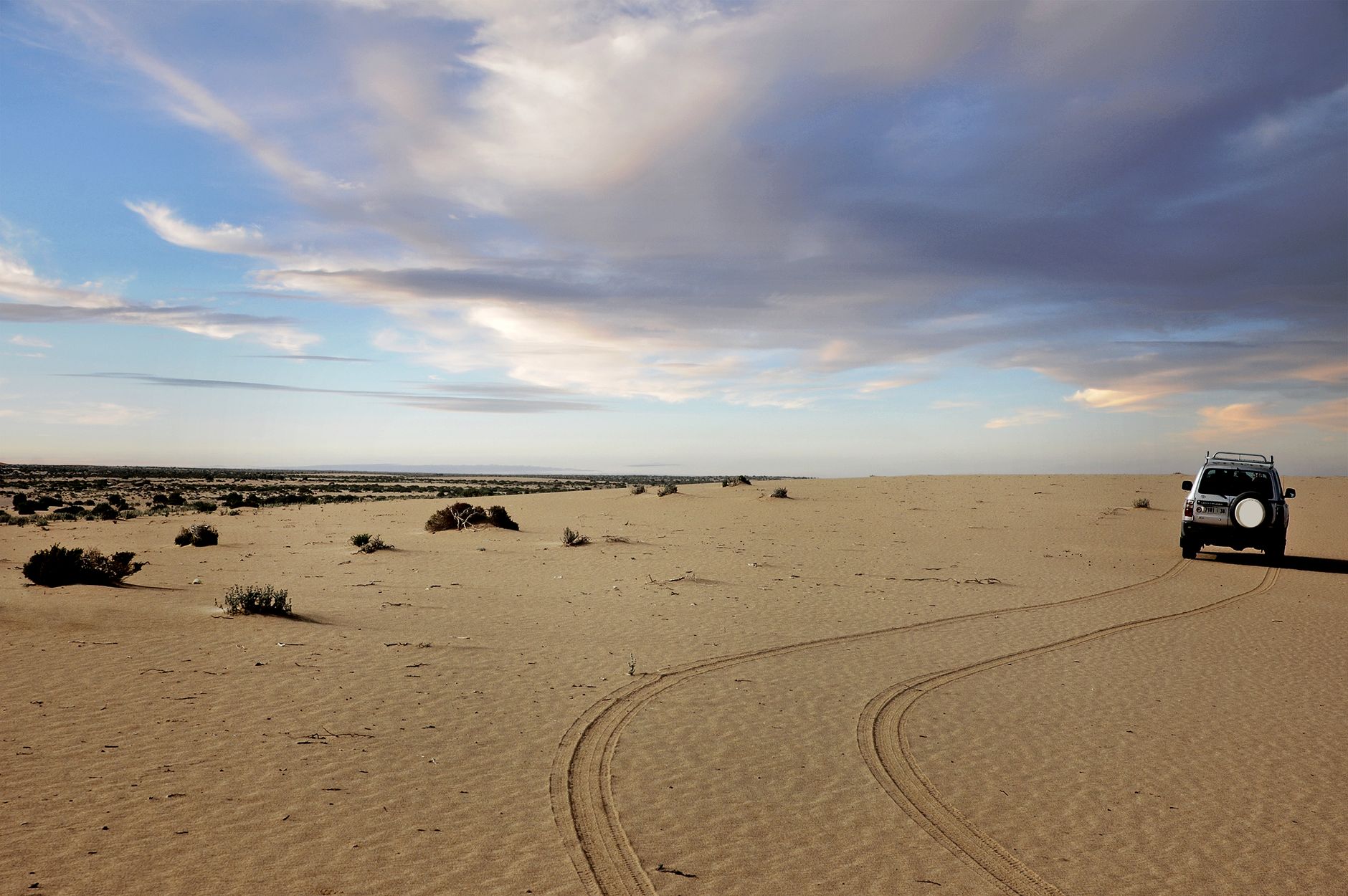
Four-wheel driving the Cooloola Way is one of those experiences that rewards preparation far more than bravado. The track runs roughly 60 kilometres through the Great Sandy National Park, connecting Rainbow Beach in the south to Noosa North Shore in the north, threading through towering scribbly gum forests, dark tannin-stained lakes and creek crossings that change character with every rain event. It's a genuine off-road route. Not a sealed tourist loop.
What kind of track is the Cooloola Way?
The Cooloola Way is classified as a formed dirt track requiring a high-clearance four-wheel drive. The surface shifts depending on where you are: hard-packed clay in drier stretches, soft sand near the beach approaches, and deep wheel ruts after wet weather. Creek crossings at places like Freshwater and Fig Tree Creek can range from ankle-deep to genuinely axle-deep after rain. Checking conditions with Queensland Parks before you depart is not optional. The park ranger station at Rainbow Beach township has current information and can tell you which sections are passable.
The track is not suitable for standard all-wheel-drive SUVs or vehicles without a low-range gearbox. If you're hiring a vehicle specifically for this trip, confirm with the rental company that the vehicle is rated for sand driving, and that your insurance covers unpaved national park tracks.
The essentials to carry
Most people who get into trouble on the Cooloola Way aren't underpowered. They're underprepared. Mobile phone coverage disappears within a few kilometres of the Rainbow Beach township. Carry a UHF CB radio (channel 40 is the standard road channel in Australia) and a paper map of the national park. The Queensland Parks app can be downloaded for offline use before you leave, which helps for track identification.
Physical gear matters too. Bring tyre deflators and a quality portable compressor. Deflating to around 18 to 22 PSI for beach and soft sand sections dramatically reduces the risk of bogging. A MaxTrax recovery board, a snatch strap, a shackle rated to your vehicle's weight, and a shovel cover most self-recovery situations. Travel with at least one other vehicle if you can. Solo four-wheel drivers do use the track, but two vehicles make any recovery straightforward rather than stressful.
- Full fuel tank before you leave Rainbow Beach township (no petrol on the track)
- At least 10 litres of drinking water per person
- A first aid kit and any personal medications
- Snacks and food for longer than you plan to be out
- A tow rope and basic tool kit
Timing and permits
You need a national park vehicle permit to drive the Cooloola Way. Permits are available online through Queensland Parks and Wildlife Service, and they're linked to your vehicle registration. Day permits cover a single calendar day. If you're camping overnight at one of the park's bush camps, you'll need a combined permit covering both vehicle access and camping. Book well ahead for school holidays and long weekends, particularly in June through to September when the weather is dry and the track is at its most accessible.
The best season for the Cooloola Way runs from May to October. Summer brings heavy rain that can close sections of the track for days at a time, and the humidity makes the forest feel oppressive rather than beautiful. The winter months offer clear skies, low humidity and firm creek crossings. Sunrise on a cold June morning in the scribbly gum country inland from Rainbow Beach is something that sticks with you.
What you'll pass through
The northern section of the track near Lake Freshwater is the most visited. Freshwater Lake sits in a hollow surrounded by paperbarks and she-oaks, and the water is a genuine dark amber from the tannins leaching out of the surrounding vegetation. It's clean. You can swim in it. The contrast between the dark water and the white sand beach at the lake's edge is unlike anything on the coast.
Further south, the track passes through a transition zone where the eucalypt forest gives way to coastal heath and eventually to the back of the famous Rainbow Beach coloured sand cliffs. The cliffs themselves are best seen from the beach, but the approach through the heath gives you a sense of the geology underfoot before you ever see the result of it. For those who love the wider Cooloola landscape, the range of nature experiences near Rainbow Beach extends well beyond the four-wheel drive track itself, including walks, birdwatching and coastal exploration that work as half-day add-ons.
Bush camping on the track
Three designated bush camp areas sit along the Cooloola Way: Freshwater Camp, Fig Tree Camp, and Poverty Point. Each has composting toilets and a cleared area for tents and camp kitchens, but no running water and no powered sites. You carry everything in and carry everything out. Fires are permitted in fireplace rings at some sites but total fire bans apply on high-risk days, so check the Rural Fire Service Queensland site before you light anything.
Camping under the scribbly gums with no light pollution and no road noise is the reason most four-wheel drivers make the trip. The night sky from Freshwater Camp on a clear winter night is extraordinary. If stargazing from a fixed location appeals, the stargazing opportunities at Rainbow Beach are just as good and require nothing more than walking out onto the beach after dark.
A note on track etiquette
The Cooloola Way carries a mix of experienced off-road drivers and people attempting their first serious four-wheel drive track. Give way generously, especially on narrow single-lane sections. If you pass someone who's bogged, stop. The culture on remote tracks in Queensland is one of mutual assistance, and it's worth maintaining. Slow down near creek crossings to check depth before committing. A crossing that looked fine an hour ago can change after a rain cell passes through upstream.
Stick to the formed track. Cutting new lines through vegetation is illegal in the national park and causes erosion that takes years to recover. The park rangers do patrol the track, and infringement notices are issued for off-track driving. The track is more than good enough on its own.
The Cooloola Way is one of Queensland's genuinely underrated adventures, sitting just outside a beach town most visitors treat as a two-night stop. Those who take a day or two to drive it properly come back with a completely different understanding of what this corner of Queensland actually contains.