
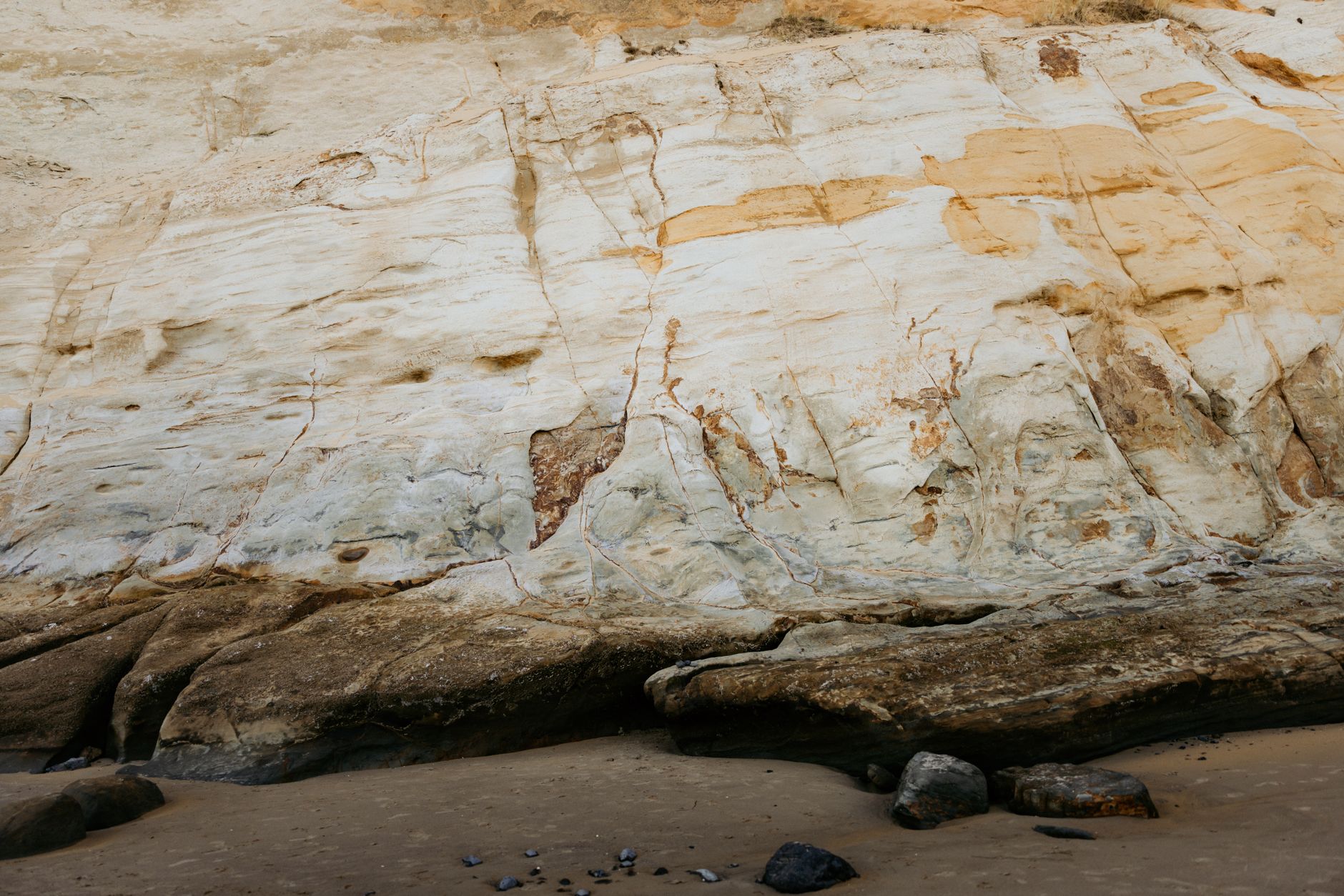
The coloured cliffs of Rainbow Beach are one of Queensland's most-photographed natural features, rising in layered bands of rust, ochre, cream and violet along the southern end of the beach. Most visitors photograph them and move on. The geology behind them is worth slowing down for.
What the colours actually are
The cliffs are made almost entirely of sand, not rock. That surprises most people on first glance. What you're looking at is compacted aeolian sand, meaning sand deposited by wind over thousands of years, stained by iron oxide compounds at different stages of its formation. The red and orange tones come from goethite and haematite, both iron oxide minerals, which leached into the sand as ancient groundwater moved through it. The white and cream bands formed where iron was absent or had been flushed away by rainfall. Pale yellow tones sit between the two, where oxidation was partial.
There are 72 distinct colour bands visible in the cliffs when conditions are right. The number shifts depending on light, moisture and the angle you're standing at. Early morning light pulls out the warmest reds. Overcast conditions make the whites and lavender tones easier to see.
How old are they?
The sand making up the Cooloola Sand Mass, which includes the cliffs at Rainbow Beach, was deposited over a period spanning roughly 40,000 years. The oldest dunes in the formation are believed to be among the oldest coastal sand deposits in Australia. They were built up during cycles of sea level change, when wind pushed sand inland from exposed continental shelf, then compressed it into the formations visible today.
The Cooloola Coast sits within the Great Sandy National Park, and the sand mass it contains is considered geologically significant at a national level, not just a scenic one. The park protects the cliffs precisely because their colour patterns are irreplaceable once disturbed.
The Aboriginal story behind the colours
The Kabi Kabi people, the Traditional Custodians of this country, hold a story explaining the cliffs' colours that predates European geology by a very long time. The story centres on a warrior named Yiningie, who was struck by a rainbow as he fell to the cliffs. His spirit, the story says, entered the sand and left the colours behind. The site carries deep cultural significance for the Kabi Kabi people, and the story offers a way of knowing the cliffs that no scientific account fully replaces.
If you're visiting with that context in mind, the cliffs feel different. The place rewards curiosity about both the science and the story it sits inside.
Why the cliffs keep changing
The cliffs erode. That's not a warning, it's just what coastal sand formations do, and it's part of what makes them dynamic rather than static. Waves undercut the base at high tide, and sections of cliff face shear away and fall to the beach. This process reveals fresh colour beneath, which is part of why the bands look vivid. They haven't had time to fade. The experience of walking beneath them at low tide feels quite different from viewing them from above, and the exposed sand at the base often shows the colour gradients close enough to touch. If you want to know what that walk looks like underfoot, walking Rainbow Beach at low tide covers the terrain in detail.
Climbing the cliffs is not permitted inside the national park. The rule protects both the formation and the person climbing it, since the sand is unstable and sections can give way without warning.
Where to see them best
The cliffs run for roughly three kilometres along the southern end of the beach, starting near the main access point at the township end and extending north toward Freshwater campsite. The most intensely coloured section sits closest to town and is visible from the beach without any walking. A longer walk reveals more variation, including bands that are only visible when the tide has pulled back far enough to expose the cliff base fully.
Carlo Sand Blow, a short drive or walk away, sits on top of the same ancient dune system and gives you a completely different perspective on the landscape that built the cliffs. The Carlo Sand Blow walk is worth adding to any visit that includes the cliffs, since the two sites tell different parts of the same geological story.
A place worth understanding
The coloured cliffs of Rainbow Beach are striking enough to stop you cold at first sight. They hold more when you know what made them: 40,000 years of wind-blown sand, groundwater chemistry, sea level shifts, and a story told by the Kabi Kabi people for generations before any of that was written down. The colours aren't decoration. They're a record.