When people talk about choosing a retreat, they focus on the programme: yoga or meditation, silent or social, a week or a weekend. The location gets treated like packaging. It isn't. The environment you place your body in during a retreat does as much work as any scheduled activity, and choosing a place that conflicts with how you actually recover can quietly undermine the whole experience.
Healing styles are real. Some people restore through movement and open air. Others need stillness and enclosure. Some need water nearby. Some need birdsong. Getting the environment right means understanding which category you fall into before you book, not after you arrive.
What a healing style actually is
A healing style is simply the sensory and social environment in which your nervous system most readily lets go. It's not a personality type quiz result. It's something you can read from your own history: where have you felt genuinely restored before? Not relaxed for an afternoon, but actually restored over days.
Think back to the last time you came home from somewhere and felt genuinely different. Not just rested, but changed. What was around you? Was it a forest, a coastline, a wide-open sky? Was it quiet or was there ambient sound? Were you alone or with a small group? Those details are your data.
If you're not sure, your stress responses give you another clue. People who find city noise physically exhausting typically restore through immersion in natural sound. People who feel anxious in open, exposed spaces often restore better in enclosed bush settings. People who feel drained by social obligation, even friendly obligation, need genuine solitude rather than a retreat centre with group dinners.
Coastal versus bush versus mountain settings
These three environment types offer genuinely different physiological effects, not just aesthetic ones.
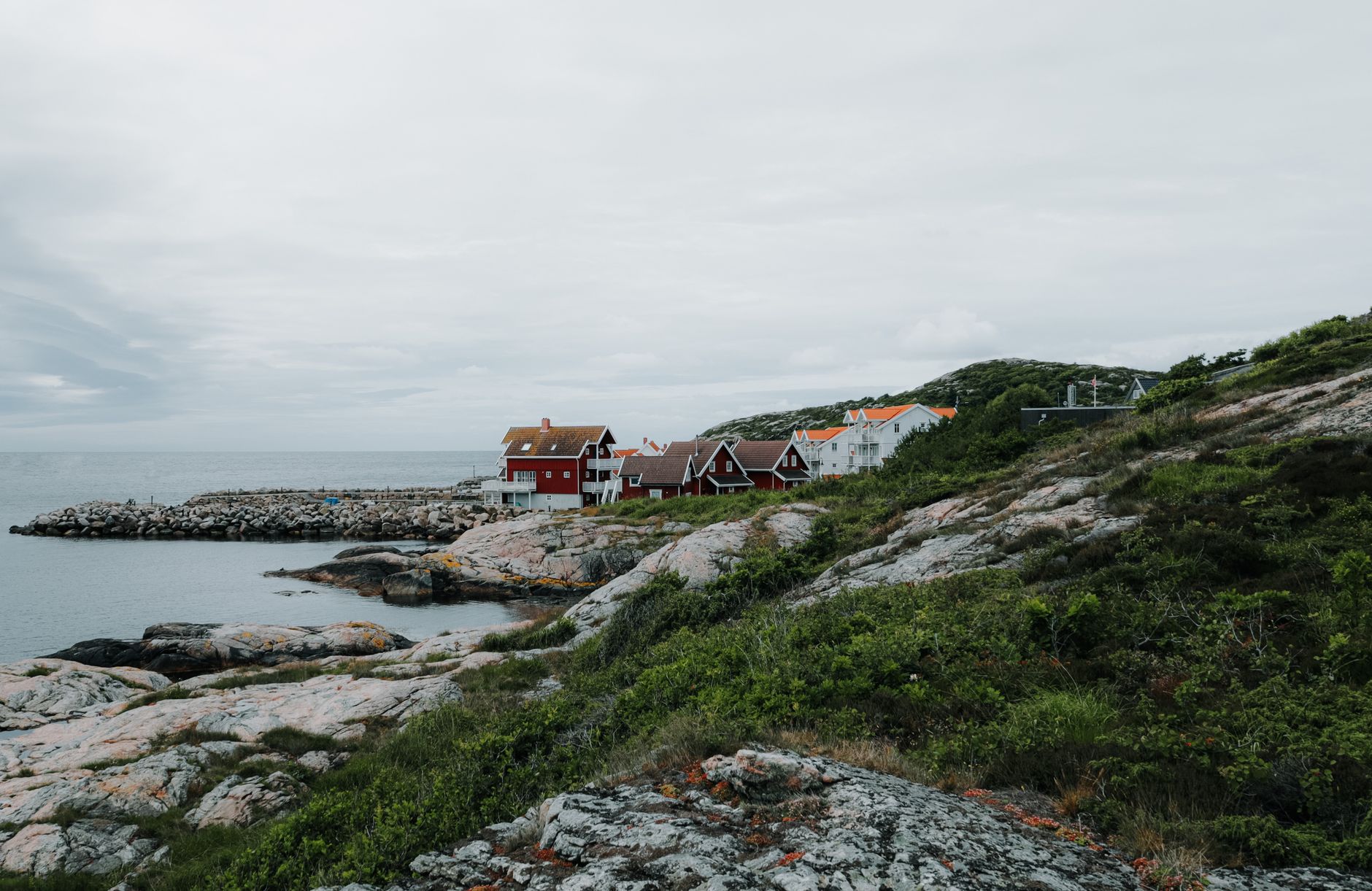
Coastal settings work particularly well for people who carry tension in the chest and shoulders, who breathe shallowly under stress, or who feel stuck in repetitive thought patterns. The negative ion concentration near breaking surf is measurably higher than inland air, and the rhythmic sound of waves has a demonstrable effect on the brain's default mode network. If your stress lives in your head, the ocean tends to pull it downward and outward.
Bush and forest settings suit people whose stress is more physical: muscle tension, disrupted sleep, inflammatory responses. Nature-based retreats in forested environments work on the body's cortisol regulation through what Japanese researchers call shinrin-yoku, or forest bathing. The phytoncides released by eucalypts and other native trees have a measurable calming effect on the immune and nervous systems. You don't need to be "a bush person" to benefit from this. You just need enough exposure over enough days.
Mountain settings are less common in Australian retreat offerings but suit people who need altitude, cold, and a sense of perspective. If you feel claustrophobic at sea level or find flat landscapes dull rather than calming, elevation changes your relationship to the environment in a way that coastal or bush settings can't replicate.
How proximity to water changes the experience
Water deserves its own consideration. A retreat near still water (a lake, a lagoon, an estuary) creates a different healing environment from one near moving water (surf, a river, the open sea). Still water tends to amplify contemplative states, making it ideal for reflection-based retreats and journalling work. Moving water is more activating: it draws you outward and keeps your attention anchored in the present.
Rainbow Beach, for example, sits at the edge of both. The surf beach faces the open Pacific, while Tin Can Bay and the Cooloola waterways offer still, sheltered water just inland. That range within a small geography is one of the things that makes it a flexible retreat location for different healing styles. If you respond to the ocean but need calmer moments too, a coastal setting with access to sheltered water gives you both registers.
People who aren't sure whether they're drawn to water at all should pay attention to how they feel in a bath versus a shower, or near a creek versus in a park. It's a reliable micro-indicator of whether water-adjacent retreat settings will work for them.
Urban-edge versus genuinely remote
There's a meaningful difference between a retreat that markets itself as a "rural escape" and one that is actually remote from the rhythms of town life. Some people restore only when they're genuinely out of mobile range, without the low-level hum of knowing they could check in. Others find genuine remoteness anxiety-provoking, especially on a first retreat.
If you're going on your first retreat and anxiety is part of your baseline, choosing a location that's 20 minutes from a small town is a sensible middle ground. You're not in a city, but you're not stranded either. Preparing thoughtfully for that first experience includes being honest about what level of remoteness your nervous system can hold without tipping into hypervigilance rather than rest.
Once you've done a retreat or two, you'll have a clearer read on where your edge is. Most people find it shifts outward over time. A location that felt too isolated at 35 feels exactly right at 42.
Noise tolerance and what it tells you about location
How you respond to ambient noise is a precise guide to retreat location. Not whether you like silence in principle, but what your body does when sound stops.
Some people find deep silence unsettling. They carry internal chatter that becomes louder when external noise disappears. For these people, a location with bird call, moving water, or light wind in the trees is more therapeutic than a completely silent setting. The external sound gives the mind something to rest on.
Others find any ambient sound a distraction from the internal processing they're trying to do. For these people, a well-insulated room in a genuinely quiet location is not a luxury, it's a functional requirement. A retreat that looks beautiful in photos but is audibly close to a highway or a busy beach access track will undo a lot of what the programme tries to do.
When you're researching locations, ask specifically about ambient sound. Not "is it peaceful?" (every retreat says yes) but "what are the sources of sound during the day and at night?" A detailed answer is a good sign. Vagueness is not.
Matching location to the kind of work you want to do
Different retreat intentions pull toward different landscapes. If you're going primarily to rest and physically recover, a sheltered, enclosed setting with good bedding, private outdoor space, and warm natural light does more for you than a dramatic landscape you're supposed to explore.
If you're going to process emotions or work through a difficult period, proximity to something vast helps. The ocean, an open sky, a high lookout. There's a reason grief, in particular, responds to big views. The landscape does some of the holding that a person might otherwise need to do alone.
If you're going to build new practices or shift a habit pattern, a location with clear daily rhythms, sunrise, tides, birdsong, helps. Natural timekeepers give structure without the artificial pressure of a timetable. Journalling during a retreat pairs especially well with locations that have strong natural cues: writing after a morning swim, or before the first bird call shifts register, tends to produce more honest material than writing at an arbitrary scheduled time.
A few questions to ask yourself before you book
You don't need to overthink this. These four questions cut through most of the noise:
- Where was I last time I felt genuinely restored? What was around me?
- Do I need to be near people I can choose to talk to, or do I need to be away from the possibility of interaction entirely?
- Does my stress live in my body (tension, pain, fatigue) or my mind (overthinking, anxiety, emotional weight)?
- Am I going to unplug from everything, or do I need the option of connection if I need it?
The answers won't point you to a specific retreat. But they will tell you what to rule out, and ruling out is where most booking decisions go right or wrong. A setting that scores poorly on even one of those questions tends to cost you the first two days while your nervous system adjusts to a mismatch.
The right location doesn't have to be extraordinary. It has to be right for you, at this point in your life, for the specific kind of rest or healing you're actually seeking.