
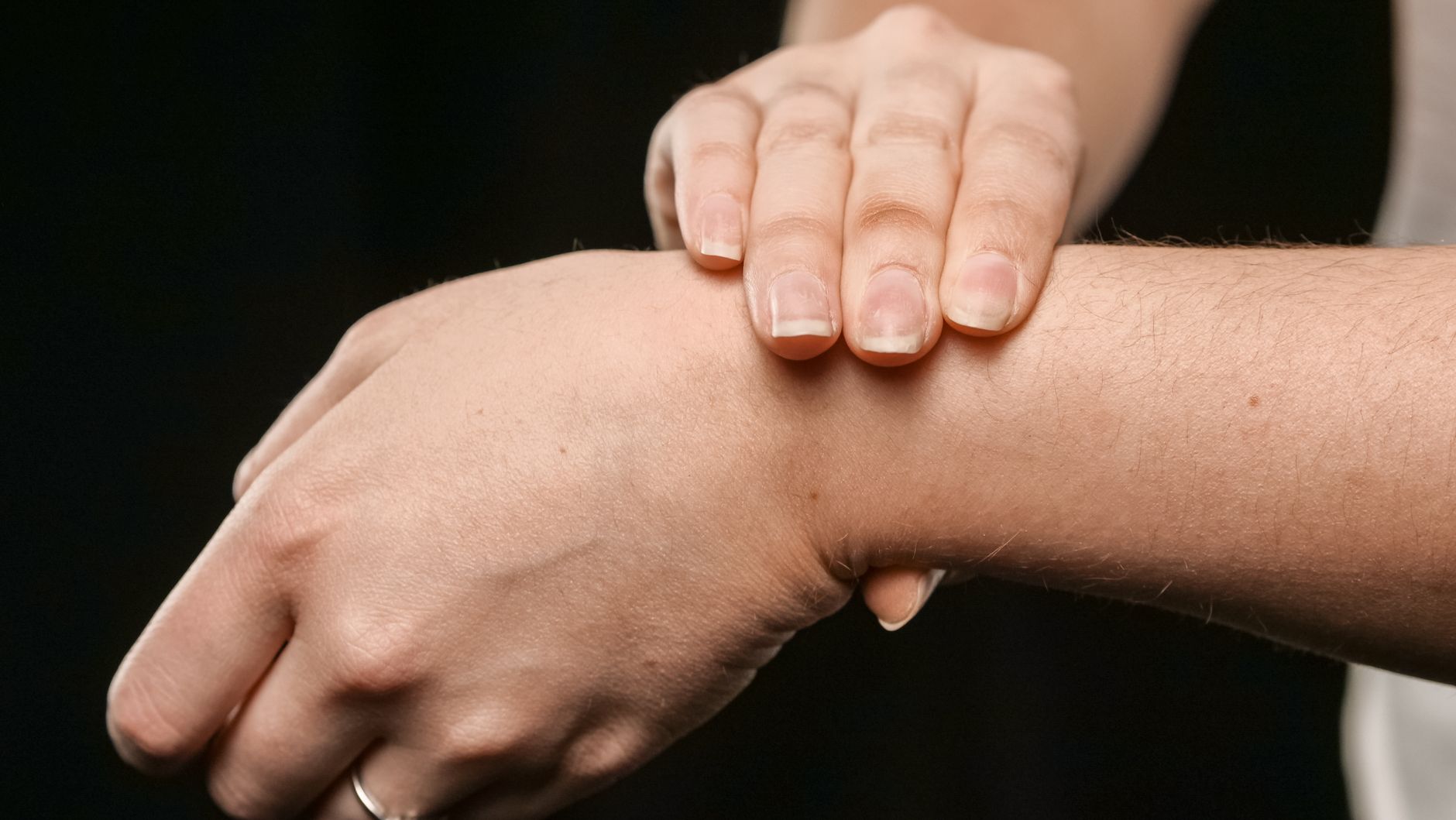
Acupressure applies firm, steady pressure to specific points on the body to encourage circulation, ease muscular tension and support the body's own healing response. It draws on the same theoretical framework as acupuncture, but it doesn't require needles or a clinic visit. You can do it yourself, at home, in a few minutes.
The practice sits firmly within the broader world of holistic health, and it's worth understanding before you try it. Pressing the wrong point, or pressing correctly but expecting a miracle, sets you up for disappointment. What acupressure reliably does is reduce localised tension, stimulate blood flow, and activate the parasympathetic nervous system. That last effect is the one most people notice first: a quiet, settling calm that starts within minutes.
How acupressure actually works
Traditional Chinese medicine describes a network of pathways called meridians, through which vital energy (qi) travels. Illness or discomfort, in this model, reflects a blockage or imbalance in that flow. Acupressure points sit along these pathways, and pressing them is thought to restore balance.
Western physiology offers a parallel explanation. Sustained pressure on a point stimulates local nerve endings, increases blood flow, and triggers the release of endorphins. It also activates the vagus nerve in some locations, which directly calms the nervous system. You don't have to choose one explanation over the other. Both are coherent and both predict the same result: the pressure works.
Technique matters. Use your thumb, index finger, or middle finger. Apply firm, steady pressure, not a rough poke. Hold each point for 30 seconds to 2 minutes. Breathe slowly through the nose while you hold it. The sensation should feel like a dull ache or a satisfying pressure, not sharp pain.
Five points worth learning
LI4 (Hegu) for headaches and face tension
Find LI4 in the fleshy web between your thumb and index finger. Pinch that web between the thumb and index finger of your opposite hand and press inward. This is one of the most researched acupressure points, used consistently for tension headaches, sinus pressure and jaw tightness. Hold for 60 seconds on each hand. Skip this point during pregnancy, as it has uterine-stimulating effects in traditional practice.
PC6 (Neiguan) for nausea and anxiety
Place three fingers across your inner wrist, measuring from the crease. PC6 sits just beneath that third finger, between the two tendons. Press firmly with your thumb. It's the point that sea-sickness wristbands target, and there's genuine clinical evidence behind it for motion sickness and post-operative nausea. It also has a calming effect on anxiety that many people find almost immediate.
ST36 (Zusanli) for fatigue and digestive discomfort
ST36 sits on the outer edge of the shin, four finger-widths below the kneecap. Press your thumb or middle finger into the muscle, not the bone. This point is used traditionally for energy depletion and digestive sluggishness. If you've had a draining day and feel too tired to think, two minutes on ST36 often produces a noticeable shift in alertness.
GB20 (Fengchi) for neck tension and eye strain
GB20 sits at the base of the skull, in the two hollow pockets on either side of the central ridge of your neck. Place both thumbs there and tilt your head back slightly, letting the weight of your head increase the pressure. Hold for 90 seconds. This point is particularly effective after long screen time. It directly relaxes the suboccipital muscles, which pull on the scalp and cause tension headaches that start at the back of the head.
KD1 (Yongquan) for grounding and sleep
KD1 is the only major acupressure point on the sole of the foot, sitting in the upper third, roughly in the centre. Curl your toes: KD1 is in the depression that appears. Press firmly for 60 seconds on each foot. It's used traditionally for insomnia and feelings of mental scatter. Combined with slow breathing, it's a useful addition to any wind-down practice. Pairing it with a considered bedtime environment makes the effect noticeably stronger.
When to use acupressure and when not to
Acupressure suits everyday complaints: mild headaches, travel nausea, work-induced neck tension, afternoon fatigue, pre-sleep restlessness. It isn't a substitute for medical assessment of persistent, severe, or unexplained symptoms. Don't press over broken skin, bruising, varicose veins, or swollen joints. As noted above, LI4 and SP6 are traditionally avoided in pregnancy.
The strongest use case is prevention rather than rescue. People who practice acupressure daily, even for five minutes, report less cumulative tension than those who reach for it only in crisis. Five minutes on GB20 at the end of a desk-heavy afternoon takes less time than recovering from a full tension headache.
Building acupressure into a daily practice
You don't need a structured session. Three points, two minutes each, is ten minutes total. That fits into a lunch break, an evening wind-down, or the few minutes before sleep. The key is consistency over intensity.
Acupressure also pairs naturally with breathwork. If you're already exploring breathwork as a beginner, adding one or two acupressure points during your practice deepens the parasympathetic response. The two approaches work through overlapping mechanisms, and the combination is more than the sum of its parts.
Start with LI4 and PC6. They're easy to locate, low-risk, and produce results that are distinct enough to be convincing. Once you've confirmed the practice works for you, add ST36 and GB20. KD1 works best at night, so save it for the evenings when you're ready to slow down.
Acupressure is a skill that improves with practice. The points get easier to find. The technique becomes more precise. And the body begins to respond more quickly, the way any conditioned response does. It asks very little and returns a lot.