
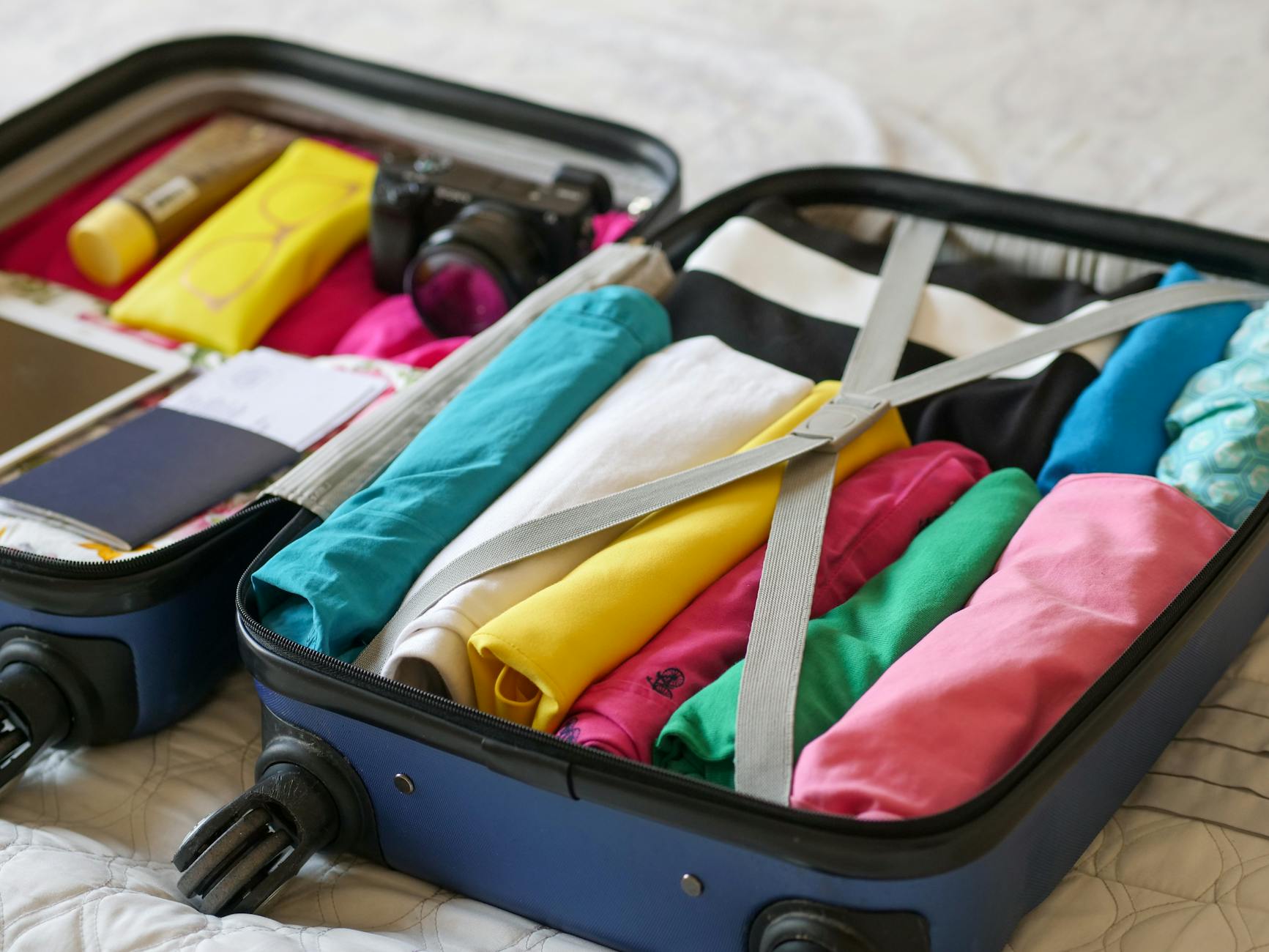
Retreat packing mistakes don't usually announce themselves. You arrive, unpack, and only then realise you've brought four things you didn't need and forgotten the two that would have grounded you. The bag you carried gets in the way of the break you came for. It's one of the most preventable reasons a retreat fails to deliver what it promised.
Overpacking: the most common mistake of all
Most people pack for a retreat the same way they pack for a holiday. That instinct is wrong. A retreat isn't a holiday. There's no sightseeing agenda, no restaurant rotation, no back-up outfit for every social occasion. The goal is simplicity, and simplicity is hard to achieve when your bag weighs 18 kilograms.
Overpacking creates a low-level stress that runs underneath the whole experience. You spend the first hour sorting through things you don't need, and the last hour cramming them back in. Between those two moments, the clutter sits at the edge of your vision and attention. Less, genuinely, is more. Lay out what you think you need, then remove a third of it. What remains is usually enough.
If you want specific guidance on what actually belongs in a retreat bag, what to bring on a wellness retreat covers the essentials and gives a clear framework for deciding what earns a place in the bag.
Bringing work "just in case"
A laptop for emergencies. A notebook for ideas that might arrive. A charger for the phone you'll check only if something comes up. It's a very familiar pattern, and it's a lie people tell themselves before every retreat they've ever attended.
Work doesn't wait politely at the door. If the tools are available, the mind finds its way back to them. Bringing a laptop "just in case" is not a safety net. It's an escape hatch from the discomfort that the retreat is specifically designed to sit with.
Leave the laptop at home. If your situation genuinely requires on-call availability, a dedicated time-boxed window of 20 minutes per day is more honest than pretending you won't use it. Set the boundary before you arrive, not in the moment when temptation appears.
Forgetting comfort items that cost nothing to carry
On the other side of overpacking sits a different mistake: omitting the small things that create a sense of home within an unfamiliar space. These aren't luxuries. They're anchors.
A familiar tea blend. A small journal. An eye mask if you're a light sleeper. One photograph, printed rather than stored on a device. These items take up almost no space and carry significant weight in terms of how settled and safe you feel during the first night, when the unfamiliarity of a new place is at its peak.
The first 24 hours of a retreat set the tone for everything that follows. Comfort items help the nervous system downshift faster, and that downshift is what allows the deeper work to begin. Pairing those small rituals with practices like dry brushing can deepen the sense of embodied presence during your first morning.
Packing for who you think you should be
This one is subtle. Someone signs up for a yoga retreat and immediately buys new yoga wear, a good mat, a fancy water bottle with motivational text. The purchases signal commitment. They also signal that the person is packing for an identity rather than for an experience.
Retreat centres almost always provide the equipment you need. A mat, blocks, blankets, bolsters. What they can't provide is the mental spaciousness you arrive with. Packing for who you think you should be at a retreat is a form of performance, and performance is exactly what a retreat asks you to set down.
Wear what's comfortable. Use what's provided. Resist the urge to curate an image of the person who would thrive at a retreat. Just go as the person who needs one.
Underestimating the cold (or the heat)
Weather is the practical mistake that ruins more retreats than people admit. A coastal Queensland retreat in July is beautiful, but the evenings carry a bite that most visitors don't anticipate. An inland retreat in February can become unexpectedly hot by mid-morning in ways that throw off sleep and concentration.
Check the forecast for the specific region, not just the city. Pack one more warm layer than you think you'll need if the retreat runs into evenings. Bring a light, breathable base layer if the days are likely to be warm. Neither of these takes meaningful space in a bag. Both prevent the distraction of physical discomfort at the moments when you'd most benefit from stillness.
Loading up on supplements and self-improvement tools
A retreat setting can trigger a version of the same compulsive self-improvement instinct that makes people download five wellness apps in a single evening. Suddenly the bag is full of collagen powder, a red light torch, a breathwork timer, a grounding mat, and three books about nervous system regulation.
It's well-intentioned and counterproductive. A retreat works precisely because it reduces the number of inputs. Every item you bring that requires a decision about when or how to use it adds cognitive load. The tools are fine at home. The retreat is the tool. Let it do its job without competition.
If you're arriving with anxiety about whether you're doing the retreat "correctly," the article how to prepare for your first retreat when anxiety is part of the picture addresses this directly and is worth reading before you start packing.
Not planning for re-entry
Packing for re-entry sounds like a post-retreat concern, but it shapes the experience from the start. Knowing you'll return to an overbooked calendar and a full inbox changes how you occupy the retreat itself. You can't be fully present when part of your mind is already problem-solving next Monday.
Before you pack the bag, clear what you can from the week after. Block at least one morning for quiet. Let one or two people know you'll be slow to respond. This isn't logistical fussiness. It extends the retreat's reach into the days that follow, when the benefits are most fragile and most worth protecting.
Retreat packing is a small act with outsized consequences. Getting it right doesn't mean packing perfectly. It means packing honestly, for the experience you're actually going to have, not the one you imagine you should want.