
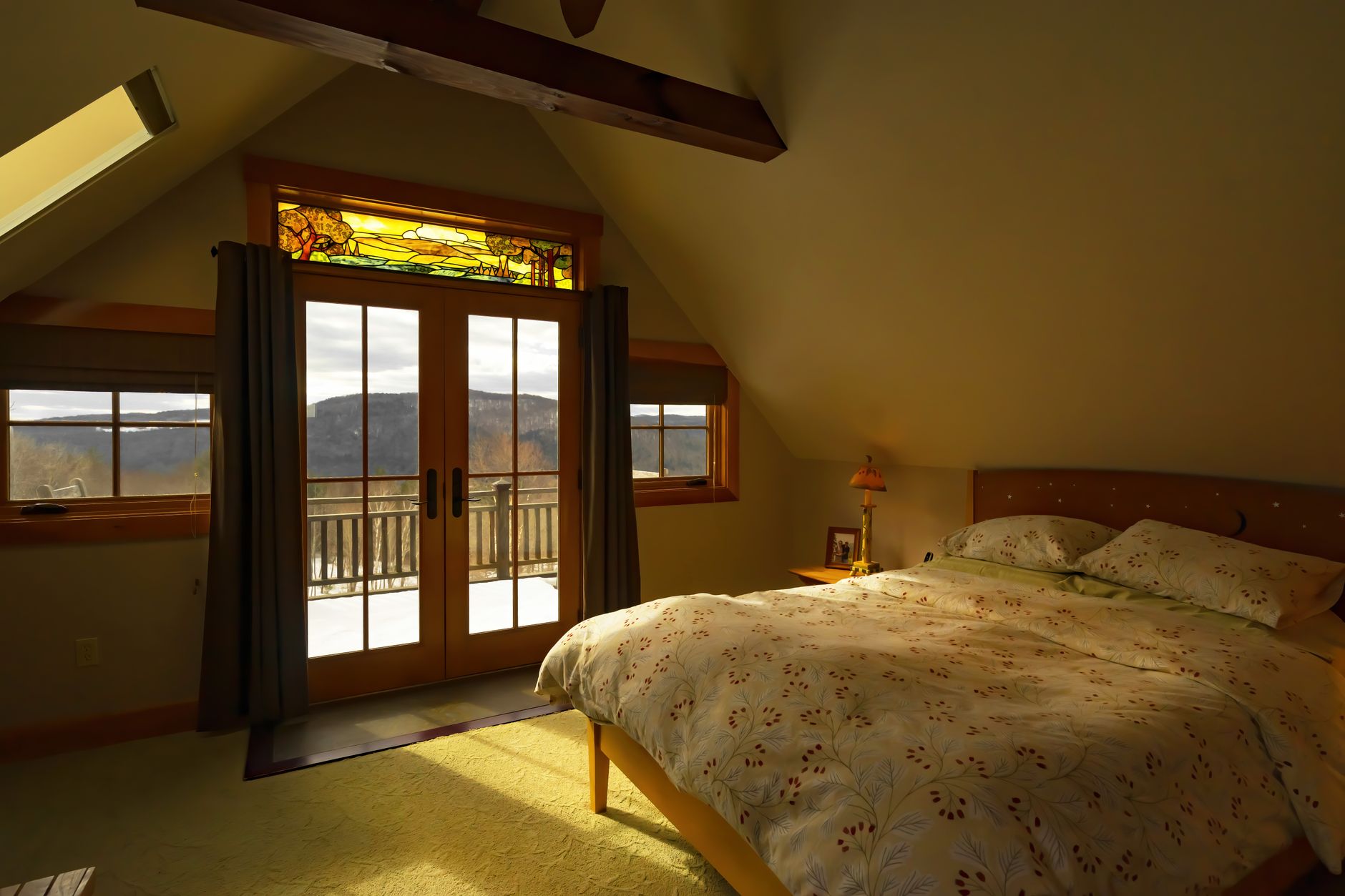
The question of who you share a retreat room with, or whether you share at all, doesn't get nearly enough attention in the planning stage. Most people treat it as an afterthought, sorted after the retreat style, the dates and the price. But your sleeping environment and the person in it will determine how deeply you rest, how honestly you open up, and how much of the experience you actually absorb.
Why this decision matters more than you think
A retreat strips away a lot of the buffers that ordinary life provides. There's no busy schedule to hide behind, no phone habit to fill the quiet, no commute to decompress in. What remains is you, your nervous system, and whoever is sleeping six feet away. That proximity is either an asset or a liability, and it's worth being honest about which it's likely to be before you arrive.
If you're attending with a friend or partner, the assumption is usually that sharing makes sense. It's cheaper and more comfortable than the unknown of a stranger. But comfort and retreat depth don't always point in the same direction. A friend who likes to debrief every session, chat until midnight or check in about what you "got from" each activity can pull you out of the inward process a retreat is designed to create. That's not a flaw in the friendship; it's just a mismatch with the container.
It's worth reading up on how to set an intention before a retreat before you settle the accommodation question, because your intention will tell you a lot about what kind of space you need. Someone seeking genuine solitude and inner stillness has different rooming requirements than someone who sees a retreat as a chance to form deep new connections.
The case for going solo in your room
A private room at a retreat costs more. That's the honest starting point. But it offers something that's hard to manufacture once you're there: full control over your sleep environment, your morning rhythm and your emotional processing space.
If you cry easily during body work, wake at unusual hours, need silence before sleep, or simply find social recovery time essential, a private room is not a luxury. It's infrastructure. You can't receive a sound bath deeply in the evening and then re-engage socially for two hours in a shared bedroom. The container gets punctured.
Solo rooming also protects the integrity of whatever emotional material surfaces. Retreats regularly bring up grief, old patterns and unexpected releases. Processing that beside a stranger, or even beside someone you love, can shut the process down faster than almost anything else.
When sharing actually works
There are real cases where sharing a retreat room is the right call. If the retreat structure itself is built around community, shared meals and collective practice, isolation in your room can work against the arc of the programme. Some retreat formats are designed so that the social layer IS the healing layer. Sharing in that context makes sense.
Sharing with a partner can also deepen a couples retreat experience specifically, where the point is to reconnect in a shared space and share in the vulnerability together. The key is that both people arrive with the same intention and the same willingness to give each other space when the programme asks for it.
Sharing with a friend works best when a few things are true:
- You've discussed sleep habits, wake times and noise tolerance honestly beforehand.
- Both of you have agreed to limit in-room debriefing and let the integration happen privately.
- Neither person will feel responsible for managing the other's emotional state during the retreat.
If those conditions feel uncomfortable to raise with the person you're considering sharing with, that's your answer.
Questions to ask yourself before you book
Forget the price for a moment. Ask yourself these instead.
Do you process emotions outwardly or inwardly? Outward processors tend to want to talk through what came up. Inward processors need time alone to let it settle. If you're an inward processor sharing with an outward one, one of you will feel frustrated by the end of day two.
How do you sleep when you're emotionally activated? Retreats regularly leave people in a lighter, more open state by evening. That's not always restful. If you're sensitive to light, movement or noise when you're in that state, a private room will protect your sleep far more reliably than earplugs and goodwill.
What would you do if the retreat brought up something you didn't expect? Everyone imagines they'll be fine. But many people are surprised by what surfaces in a contained environment. If your honest answer involves needing to cry, sit quietly, or simply stare at the ceiling for a while, having a private space makes that possible. Without one, you'll likely suppress it.
How to have the conversation if you're going with someone
If you're already committed to attending with a friend, don't avoid the conversation about rooms. Raise it early and frame it as practical rather than personal. Something like: "I know I need quiet before sleep and I process things internally, so I'm thinking I'll book my own room. Would that work for you?" gives the other person permission to do the same without feeling rejected.
It's genuinely possible to attend a retreat together and sleep apart, share most of the programme, and still have a richer shared experience than you would have had squeezed into one room trying to decompress together every evening. Distance in the sleeping arrangement often creates closeness in the actual programme.
A note on stranger-sharing
Some retreats assign shared rooms to participants who don't know each other. If this is the case, ask the retreat coordinator about their matching process. Responsible retreat operators ask about sleep habits, waking times and intentions before assigning room pairings. If the answer is vague, it's worth paying the single supplement.
Being placed with a stranger who processes loudly, wakes at 5am or simply radiates the kind of social energy that demands reciprocation can quietly unravel what might otherwise have been a restorative week. The decision isn't about being difficult. It's about protecting the conditions you need to actually benefit from what you've signed up for.
Approach the rooming question the same way you'd approach retreat packing: with honest self-knowledge rather than optimistic assumption. What you arrange before you arrive shapes the entire arc of what's possible once you're there.